Most discovery calls end with a rep knowing more facts about a prospect. The best ones end with the prospect thinking differently about their own problem.
The difference is not just the questions you ask. It is what you are listening for.
Average discovery collects information. Strong discovery listens for signals: urgency, impact, risk, decision criteria, and the moments where the prospect reveals what actually matters.
A discovery call framework gives you a way to recognize those signals without forcing every conversation through the same sequence of questions.
This guide covers what to prepare before the call, what to listen for while it is happening, and what to capture afterward so the next step reflects what the prospect actually said.
Key Takeaways
- A discovery call framework tells you what to listen for, not exactly what to say.
- The four core signals are the trigger, blocker, impact, and decision map.
- A checklist can support preparation and follow-up, but it should not control the live conversation.
- The most important information often appears outside the order your questions were prepared in.
- Strong discovery ends with shared clarity about the problem, the stakes, the decision process, and the next step.
Discovery Call Framework at a Glance
A useful discovery framework helps you understand four things:
| Signal | What it reveals | Question to keep in mind |
|---|---|---|
| Trigger | Why the conversation is happening now | What changed? |
| Blocker | Why the problem has not already been solved | What keeps the current situation in place? |
| Impact | What the problem affects and why it matters | What happens if nothing changes? |
| Decision map | How the team will evaluate and act | Who needs to believe this matters, and what do they need to see? |
You may not uncover all four in a single call.
The framework is not a scorecard. It helps you notice what is clear, what is still missing, and where the conversation should go next.
Framework vs. Script vs. Questions vs. Checklist
These tools support different parts of discovery.
A framework tells you what to understand
The framework organizes the signals behind the decision: why now, why the problem persists, what the impact is, and how a decision will be made.
A script gives you usable language
A script helps with the opening, transitions, follow-up phrasing, summary, and next step.
For practical language you can adapt during the conversation, see the discovery call script.
Discovery questions help you explore
Questions are individual tools. Their value depends on when and why they are asked.
A strong question asked without context can still feel mechanical. A simple follow-up asked at the right moment can reveal the real issue.
A checklist protects the process
A discovery call checklist helps the rep prepare, remember essential areas, and capture what matters afterward.
It should support the conversation—not become the conversation.
Before the Call: Know What You Are Listening For
Discovery is not a checklist. But going in without a framework means you may collect information without knowing what to do with it.
Before the call, establish the minimum useful context.
Review what is already known
Check:
- Who you are speaking with
- Their role and likely responsibilities
- Previous conversations or email threads
- Known priorities and open questions
- Relevant account, product, or implementation context
- The purpose of this specific call
The goal is not to predict the full conversation. It is to avoid asking the prospect to repeat information your team already has.
For a more detailed preparation workflow, see the sales call preparation guide.
Form a hypothesis, not a conclusion
You may have an idea about why the prospect took the call.
Treat it as something to test.
For example:
The team may have enough sales material, but reps may struggle to use it while calls are moving.
That is a useful starting hypothesis. It becomes a problem when the rep tries to make every answer confirm it.
Prepare to listen for four signals
Before the call, keep these questions in view:
- Trigger: Why is this worth discussing now?
- Blocker: Why has the problem remained unresolved?
- Impact: What does the current situation make harder, slower, riskier, or more expensive?
- Decision map: Who is involved, and what would need to be true to move forward?
You do not need a long list of prepared questions for each one.
You need enough structure to notice when one of these signals appears.
During the Call: Six Techniques That Surface Real Buying Signals
1. Open With Curiosity, Not a Pitch
Starting a discovery call with a tightly structured company presentation sets the wrong tone.
The prospect feels interviewed or sold to before they feel understood.
A better opener:
Before I share much about what we do, I would like to understand what is actually driving this conversation for you right now.
This does two things:
- It signals that the conversation will begin with their situation.
- It creates room for the trigger to emerge in their own words.
If the answer is broad, follow it with something concrete:
What changed recently that made this worth looking at now?
The first answer may name the topic. The follow-up begins discovery.
2. Follow the Signal, Not the Script
Most reps have prepared questions. The problem is that the most important information rarely appears where the planned sequence expects it.
Signals often show up as:
- A specific number
- A named stakeholder
- A deadline
- A risk
- A frustrated aside
- A contradiction
- A sudden change in tone
- A detail the prospect mentions and quickly moves past
When that happens, stay with it.
You mentioned the team goes back to old habits when calls get difficult. What does that look like in practice?
The script is a fallback. The signal is the priority.
A good script helps the rep stay oriented without forcing the prospect through a fixed path.
3. Ask About Impact, Not Only the Problem
Reps are trained to uncover pain points. But a named problem does not automatically explain why the team would act.
Ask:
How is that showing up day to day?
Who feels the problem most directly?
What happens when this goes wrong during a customer conversation?
What does this slow down or make harder?
What happens if nothing changes this quarter?
Impact questions connect the problem to consequences.
They may reveal that:
- Managers repeatedly step into routine calls
- New reps delay answers that should be available live
- Buyers receive inconsistent information
- Follow-up becomes a substitute for useful conversation
- A process works for a small team but will not scale
The impact is not always financial. It may involve trust, speed, risk, workload, or consistency.
4. Find the Blocker Behind the Current Approach
Most teams are already doing something about the problem.
They may have:
- Training
- Playbooks
- CRM notes
- Shared documents
- Call recordings
- Managers supporting reps
- Existing sales tools
Ask:
How are you handling this today?
Then go deeper:
What works well about that approach?
Where does it stop being useful?
What have you already tried?
Why do you think the problem has stayed unresolved?
The blocker often tells you more than the pain point.
The issue may not be a lack of information. It may be that the information is fragmented, outdated, difficult to retrieve, or unavailable while the conversation is moving.
5. Surface the Decision Map Early
Discovery is also about understanding how the prospect will evaluate change.
Do not wait until the final two minutes to ask a disconnected series of budget, authority, and timeline questions.
Use the problem as the bridge:
If your team decides this is worth solving, who else would need to be involved?
What would they need to understand or trust?
Is there a deadline or business event shaping the timing?
What would need to be true for the team to move forward?
Have you evaluated a similar change before?
The goal is not to qualify the prospect as quickly as possible.
It is to understand what a credible next step requires.
6. Name What You Are Hearing
Reflecting the prospect’s situation back—accurately and specifically—is one of the most useful discovery techniques.
It sounds like the issue is not whether the team has the right material. It is whether reps can access and use it consistently during live calls. Is that accurate?
This:
- Confirms that you understood
- Gives the prospect a chance to correct you
- Connects separate parts of the conversation
- Often prompts an important additional detail
Use the prospect’s language when possible.
Do not make the summary sound more polished than the situation they described.
A Discovery Call Checklist That Supports the Framework
A checklist is useful when it protects the process without replacing judgment.
Before the call
- Review the account and contact context already available
- Understand why this meeting was scheduled
- Identify the most important unknowns
- Prepare a hypothesis without treating it as a conclusion
- Know which product, pricing, or implementation information may be relevant
- Protect enough time for a summary and next step
During the call
- Establish the purpose and agenda
- Listen for the trigger
- Understand the current approach
- Identify the blocker
- Explore the impact
- Note stakeholders and decision conditions
- Follow important specifics even when they appear out of sequence
- Reflect back what you heard
- Clarify what is still unknown
- Agree on a next step that matches the conversation
After the call
- Record the trigger in the prospect’s own language
- Capture the current approach and blocker
- Note the impact and desired outcome
- Document stakeholders and decision conditions
- Record unresolved questions
- Confirm commitments made by both sides
- Prepare the context the next conversation will need
The checklist should make the framework easier to apply.
It should not be used to judge a call by how many boxes were checked.
After the Call: Turn Discovery Into Shared Context
Discovery loses value when the useful information remains only in the rep’s memory.
After the call, capture what would help someone understand the opportunity without replaying the entire conversation.
Focus on:
- Why the conversation is happening now
- What the team is doing today
- Why the current approach is not enough
- What the problem affects
- What the buyer wants to change
- Who else is involved
- What remains unanswered
- What both sides agreed to do next
Good sales call notes preserve the context the next conversation needs—not every sentence from the last one.
The summary should also be shared back with the prospect when appropriate.
A concise recap can reveal misunderstandings before they become part of the deal.
What Real-Time Support Changes About Discovery
Discovery calls are where deals begin to move—or quietly stall.
They are also where reps are likely to miss a signal because the relevant context is not available quickly enough.
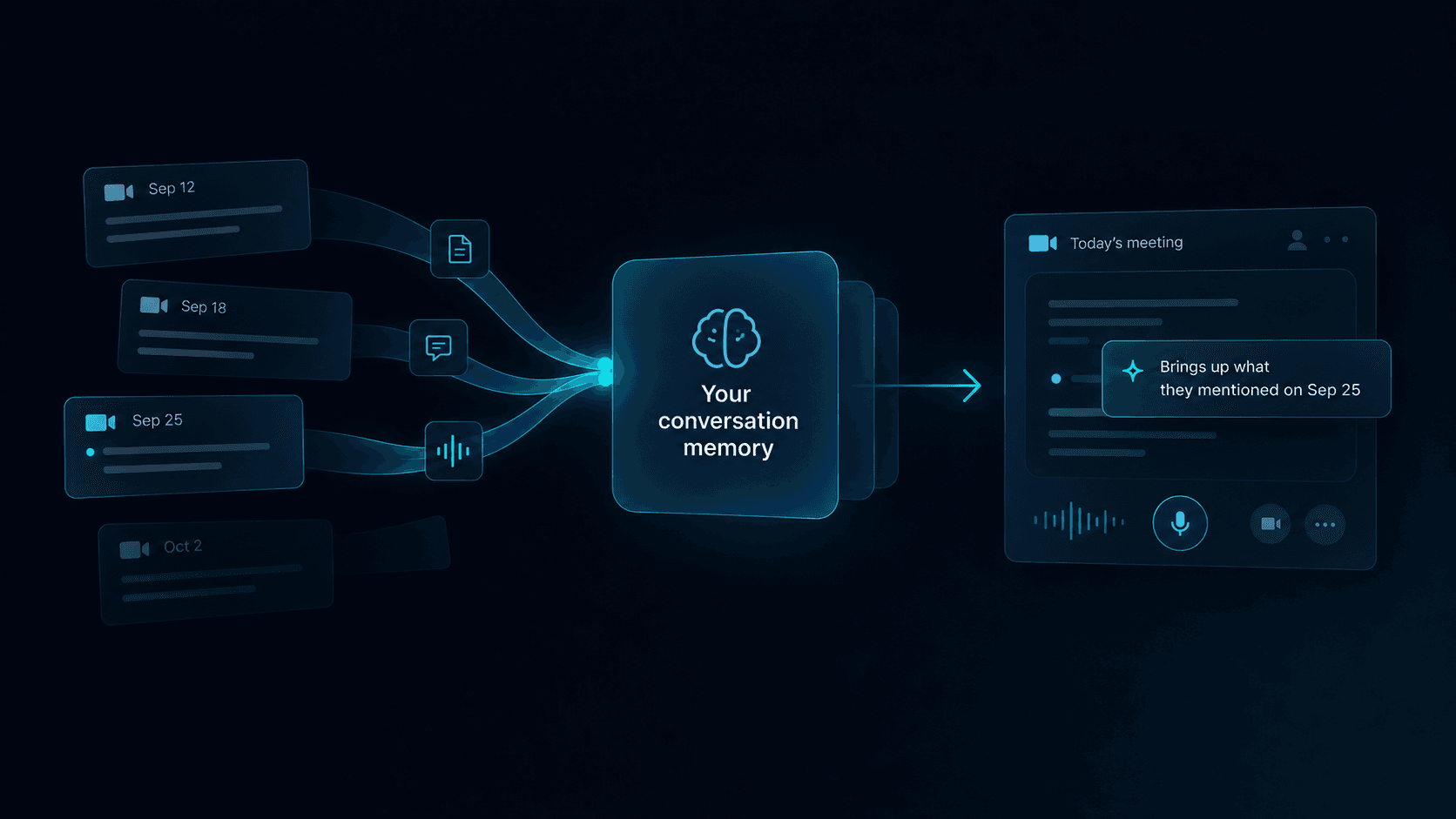
Imagine a prospect mentions that the team already has sales enablement material, but reps still “go back to old habits” during live calls.
That detail may sound secondary. But it changes the discovery path.
The issue may not be the quality of the content. It may be whether the rep can access the right information while the conversation is moving.
In that moment, useful support might surface:
- Relevant account history
- Approved product context
- A previous unresolved question
- A cue to clarify the current workflow
The rep still has to listen, interpret the situation, and decide what to ask.
For a closer look at this knowledge-access problem, see how to find the right information during a sales call.
For a broader explanation of live guidance during conversations, see real-time sales coaching.
Where kernous Fits
kernous helps sales teams access the context they already have while a live conversation is happening.
When a prospect introduces a new concern, refers to an earlier conversation, or asks a detailed question, kernous can surface relevant account context, product knowledge, approved guidance, or a useful follow-up cue.
The rep still owns the listening, judgment, and relationship.
kernous helps make sure the context they need is already there when the conversation shifts.
FAQ
What is a discovery call framework?
A discovery call framework is a structure for understanding the signals behind a buying decision. It helps a rep listen for the trigger, blocker, impact, and decision map without forcing every conversation through the same list of questions.
What is the goal of a discovery call?
The goal is to understand what is driving the prospect’s decision, what the current problem affects, why it has remained unresolved, and what would need to be true for the team to move forward.
What should be included in a discovery call checklist?
A discovery call checklist should cover preparation, the key signals to explore during the conversation, and the information to capture afterward. It should support the framework without turning the call into a mechanical interview.
What is the difference between a discovery call framework and a script?
A framework tells the rep what to understand. A script provides language for opening, following up, summarizing, and agreeing on a next step. The framework guides the thinking; the script supports the delivery.
What questions should you ask on a discovery call?
Useful questions explore why the conversation is happening now, how the current problem affects the team, why it has not already been solved, who is involved in the decision, and what would need to be true to move forward.
How long should a discovery call be?
Many B2B discovery calls are planned for 30 to 45 minutes, but the right length depends on the complexity of the situation. The quality of the signals uncovered matters more than whether every prepared question was asked.
Can AI help during discovery calls?
AI can help surface relevant account context, approved product information, and useful follow-up cues while the call is happening. It should support the rep’s judgment rather than decide what the rep should say.