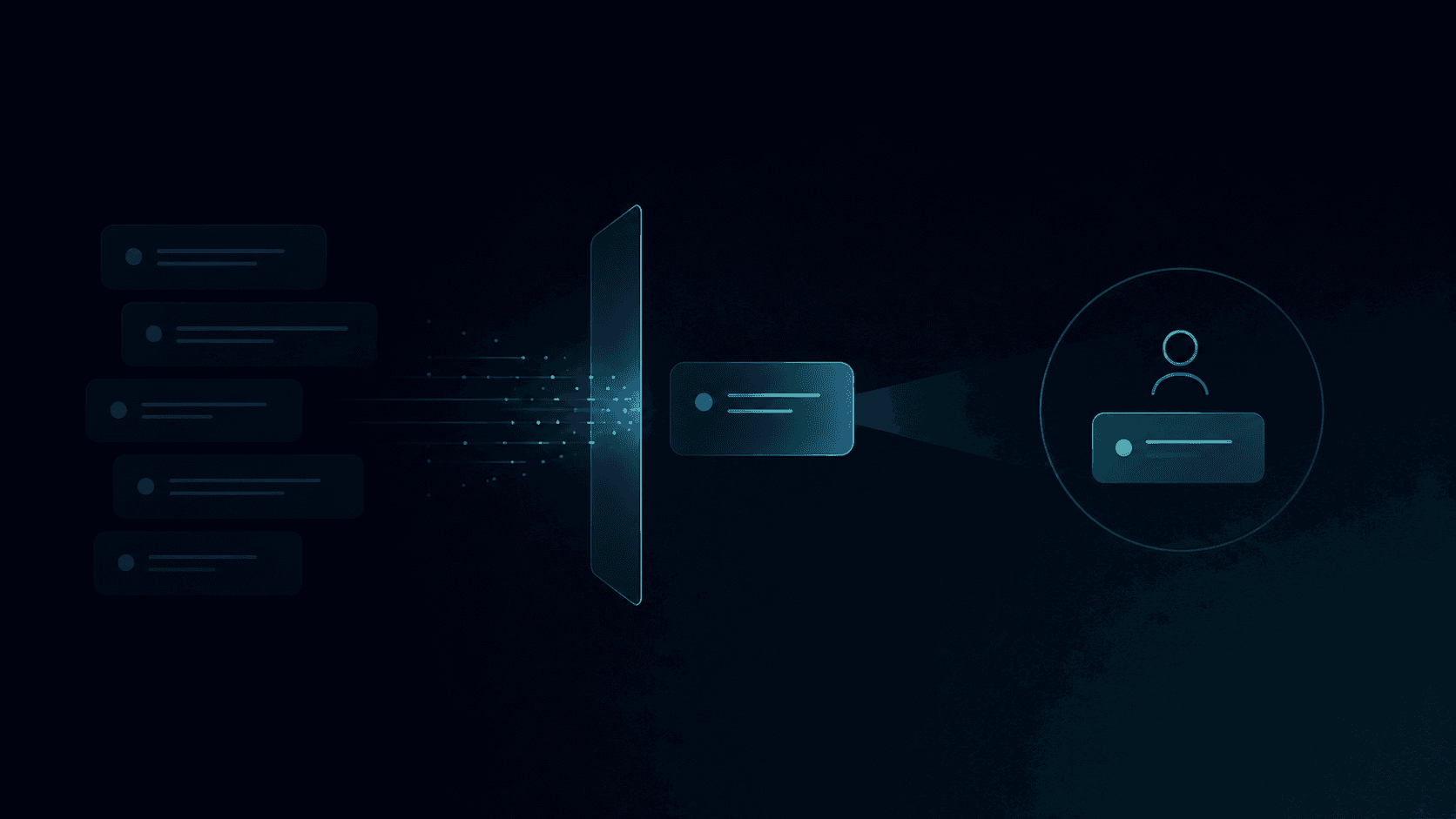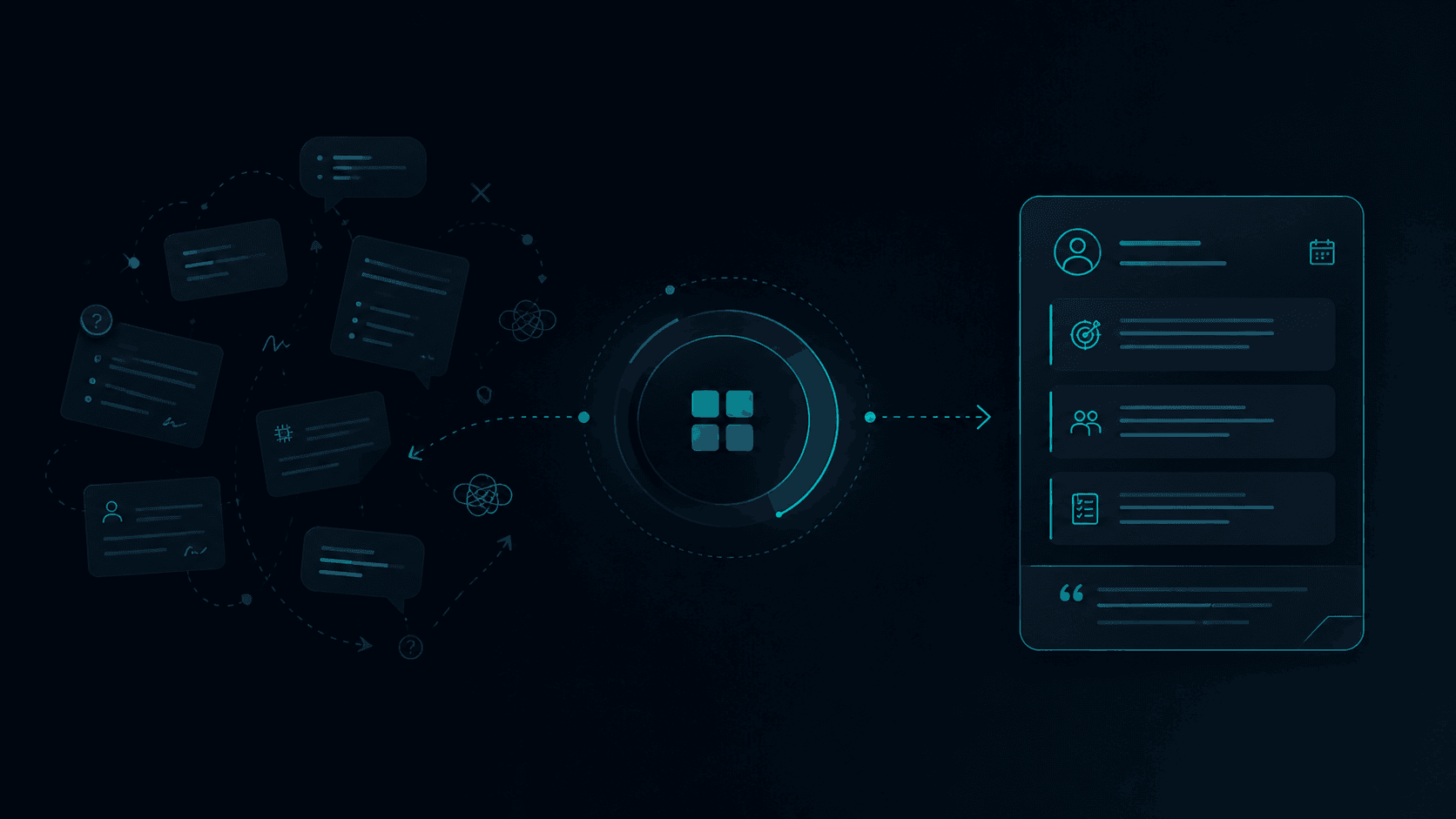
Most bad sales calls do not fail because the rep forgot a feature.
They fail because the rep enters the call with no point of view. The prospect starts talking, a detail comes up, and the rep has nothing useful to do with it. So the call turns into a generic pitch, a loose discovery checklist, or a product tour that could have been given to anyone.
Preparation is what keeps that from happening.
Not hours of research. Not a twenty-tab deep dive. Just enough context to know why this person might care, what you are listening for, and what a good next step should look like.
This guide covers what to prepare before a sales call, how to do it without wasting time, and how to keep that context useful once the conversation starts.
Key Takeaways
- Sales call preparation is not about knowing everything. It is about knowing what to listen for.
- A prepared rep enters the call with one hypothesis, one relevant trigger, and one clear next step.
- The best preparation fits on a single page. If it is too much to use during the call, it is not preparation — it is homework.
- Real-time support matters because even strong preparation cannot predict everything the prospect will say.
What Sales Call Preparation Is Actually For
Preparation should give the call a shape.
It should help you answer four questions before the meeting starts:
- Why is this prospect worth talking to right now?
- What problem do I think they might have?
- What do I need to learn before I can recommend anything?
- What next step would make sense if the call goes well?
That is it.
A lot of reps over-prepare in the wrong direction. They read every press release, scan every LinkedIn post, memorize every company fact, and still get on the call without a clear reason for the conversation.
Company knowledge is useful only if it changes how you run the call.
Knowing that a prospect opened a new office is not useful by itself. It becomes useful when it gives you a hypothesis: maybe they are hiring, expanding outbound, entering a new market, or dealing with a more complex handoff process.
The point is not to prove you did research.
The point is to enter the conversation with a sharper ear.
The Sales Call Preparation Checklist
Use this checklist before a scheduled sales call, discovery call, demo, or follow-up conversation.
You do not need to spend the same amount of time on every item. For a first call, the trigger and hypothesis matter most. For a later-stage call, the decision map and open questions matter more.
1. Confirm the Call Context
Before preparing the content of the call, confirm the basic context.
Ask:
- Who booked the meeting?
- Who is attending?
- What was the original reason for the call?
- Has anything changed since the meeting was booked?
- Is this a first conversation, a follow-up, or a decision-stage call?
This sounds obvious, which is why reps skip it.
But the frame of the call changes everything. A first discovery call should not be run like a demo. A follow-up with a decision maker should not restart from the beginning. A meeting booked by a junior team member may need a different opening than one booked by the buyer.
The goal is to avoid walking into the wrong conversation.
A simple note is enough:
First call with VP Sales. Meeting came from outbound. Trigger: hiring 8 SDRs this quarter. Need to understand current onboarding and live-call support process.
That is already more useful than a page of company facts.
2. Find One Recent Trigger
A trigger is the reason this conversation might matter now.
It can be external:
- New funding
- New market expansion
- Hiring push
- Product launch
- Leadership change
- Regulatory or market shift
Or it can be internal:
- Missed target
- New initiative
- Team growth
- Tool consolidation
- Process change
- A known workflow problem
The trigger gives your opener relevance. It also gives your discovery questions direction.
Without a trigger, you are starting from a generic place:
Tell me about your sales process.
With a trigger, you can start with a point of view:
I saw your team is adding producers across three regions. I’m curious how you are keeping call quality consistent as new reps ramp.
That question is still open. It is not a pitch. But it gives the prospect something concrete to respond to.
For an independent P&C agency, the trigger might be a new commercial lines producer joining the team, a push into a new coverage area, or principals trying to ramp junior producers faster without sitting in on every call.
The pattern is what matters: the trigger tells you what pressure the buyer may be feeling.
3. Write One Hypothesis
A hypothesis is your best guess about what might be happening.
It should be specific enough to test, but loose enough to be wrong.
Bad hypothesis:
They need better sales performance.
Better hypothesis:
They may be scaling the team faster than managers can coach live calls.
Even better:
New reps may have access to playbooks and CRM notes, but they may not be able to use that context fast enough during live customer conversations.
The point is not to prove yourself right. The point is to listen with intent.
A hypothesis gives you a starting line for discovery:
When a newer rep is on a live call and gets a question they haven’t heard before, what usually happens today?
That is a much better question than:
What are your sales challenges?
The second question asks the prospect to do all the work. The first shows that you understand the shape of the problem and invites them to correct or sharpen it.
That is where good discovery starts.
4. Know the Person, Not Just the Company
Company research is easy to overdo. Person research is easier to underdo.
Before the call, identify:
- Their role
- Their likely priority
- Their level of decision power
- What they are probably measured on
- What they may personally care about in the conversation
A founder cares about different things than a sales manager. A principal at an insurance agency cares about different things than a junior producer. An enablement lead may care about consistency and ramp time. A frontline rep may care about not freezing when a prospect asks something unexpected.
The same product can matter for different reasons depending on who is in the room.
That should change how you open.
For a manager:
I’d like to understand where reps tend to need the most help during live calls, and what you are already doing to coach those moments.
For a rep:
I’d like to understand what information you usually wish you had faster when a call starts moving in an unexpected direction.
Same topic. Different angle.
That difference matters.
5. Prepare Three Questions, Not Fifteen
A long discovery checklist makes the rep feel prepared until the call starts.
Then the prospect answers question two with something unexpected, and the rep either ignores it to get back to the list or follows it and loses the structure.
Prepare three questions instead:
- One trigger question
- One impact question
- One decision question
Example:
Trigger question
What made this worth looking at now?
Impact question
When that breaks down, what does it actually cost the team?
Decision question
If this were going to be worth moving forward with, what would you need to feel confident about?
These three questions can carry most first calls.
They are not clever. They are useful.
The trigger question tells you why the conversation is happening. The impact question tells you whether the problem matters. The decision question tells you what the prospect needs before the deal can move.
Everything else can come from listening.
6. Prepare Your Point of View
A sales call should not be a pitch, but it also should not be an interview.
At some point, the prospect expects you to have a point of view. They want to know what you see, what patterns you recognize, and what you would suggest based on what they told you.
Before the call, write one sentence that connects your hypothesis to your product.
For kernous, that might sound like:
Most teams already have notes, scripts, and playbooks. The problem is that reps cannot access the right piece of context fast enough while the conversation is still happening.
That is not a full pitch. It is a point of view.
It gives you a bridge from discovery into product without sounding like you are switching into demo mode.
A useful structure:
What we usually see is [pattern]. The issue is not [obvious problem], it is [deeper problem]. That is where [solution] becomes useful.
Example:
What we usually see is that managers have already built the right playbooks. The issue is not lack of content. It is that reps cannot pull the right talk track, objection response, or account detail into the call at the moment they need it.
That is the difference between describing a feature and naming a problem the prospect recognizes.
7. Decide the Next Step Before the Call Starts
A lot of calls end weakly because the rep starts thinking about the next step too late.
The last two minutes of a call are not the time to figure out what should happen next. By then, the prospect is already looking at the clock.
Before the call, decide what a good next step would be.
Possible next steps:
- Schedule a deeper discovery call
- Bring in a manager or technical stakeholder
- Run a focused demo
- Review a specific workflow
- Send a proposal
- Share a short recap and confirm whether there is a fit
The next step should match the stage of the conversation.
If this is the first call and the problem is still unclear, pushing for a full demo may feel premature. If the buyer has already confirmed urgency and decision criteria, ending with “I’ll send over more information” may be too soft.
A strong close sounds specific:
Based on what you described, I think the useful next step is a focused walkthrough of how this would work during a live call. We can keep it to twenty minutes and use the two scenarios you mentioned. Does Thursday or Friday work?
That close works because it ties the next step to the conversation that just happened.
It does not feel like a generic calendar grab.
A 10-Minute Sales Call Prep Routine
If you only have ten minutes before a call, do this:
Minute 1–2: Confirm the basics
Check who is attending, what company they are from, and why the meeting was booked.
Minute 3–4: Find one trigger
Look for one recent signal that explains why this conversation might matter now.
Minute 5: Write your hypothesis
One sentence. No more.
I think they may be struggling with [problem] because [trigger].
Minute 6–7: Prepare three questions
One trigger question. One impact question. One decision question.
Minute 8: Prepare your point of view
Write the one sentence you want to be able to say if the prospect asks, “So how do you help with that?”
Minute 9: Decide the next step
Know what you will suggest if the call goes well.
Minute 10: Clear the screen
Close the tabs you do not need. Keep only the notes you can actually use while listening.
The last step is more important than it sounds.
Too much preparation creates clutter. The rep ends up reading, searching, and switching tabs instead of listening.
The best prep is usable under pressure.
What to Keep in Front of You During the Call
Do not keep the whole research file open.
Keep a single call sheet with five things:
- Trigger
- Hypothesis
- Three questions
- Key account context
- Intended next step
That is enough.
The call sheet should help you stay present, not pull you out of the conversation.
If the prospect says something important, you should be able to connect it back to the call sheet quickly:
- Does this confirm the hypothesis?
- Does it change the problem?
- Does it reveal impact?
- Does it introduce a new stakeholder?
- Does it change the next step?
That is what preparation is for.
Not to control the conversation. To notice when it moves.
When Preparation Is Not Enough
Even a well-prepared rep cannot predict every live moment.
A prospect may ask about a competitor you did not research. They may mention a workflow you have not seen before. They may bring up pricing earlier than expected. They may describe a problem that sounds close to your hypothesis, but not exactly.
Those moments are where many calls go flat.
The rep starts searching. The pause gets longer. The prospect feels the shift. The conversation loses momentum.
This is the gap kernous is built for.
Preparation gives the rep a starting point. kernous helps when the conversation moves away from that starting point. It surfaces relevant prompts, talk tracks, and context during the live call, so the rep can stay with the prospect instead of digging through notes.
The goal is not to replace preparation.
The goal is to make preparation usable when the call stops following the plan.
Because the best sales calls are not the ones that go exactly as expected. They are the ones where the rep knows what to do when they do not.
FAQ
How do you prepare for a sales call?
Prepare by confirming the call context, finding one recent trigger, writing one hypothesis, preparing three discovery questions, and deciding the next step before the call starts. The goal is not to know everything about the prospect. The goal is to know what you are listening for.
How long should sales call preparation take?
For most first calls, 10 to 15 minutes is enough. Spending more time can help for strategic accounts, but only if the research changes how you run the call. A short, focused call sheet is usually more useful than a long research document.
What should be included in a sales call preparation checklist?
A strong sales call preparation checklist should include the prospect’s role, the call context, one recent trigger, your hypothesis, three discovery questions, key account context, and a clear next step. Everything on the checklist should be usable during the live conversation.
What is the biggest mistake reps make before sales calls?
The biggest mistake is preparing facts without preparing a point of view. Knowing company details is not enough. Reps need a hypothesis about why the prospect might care, what problem may be worth exploring, and what next step would make sense if the call goes well.
Can AI help with sales call preparation?
Yes, but the most useful AI support does not stop at pre-call research. Reps also need help during the live conversation, when prospects ask unexpected questions, raise objections, or mention details that change the direction of the call. Real-time AI helps keep the right context available while the rep is still in the conversation.