A sales script that sounds scripted is worse than no script at all.
The prospect can hear it immediately: the unnatural rhythm, the over-polished phrasing, the pause while the rep searches for the next line. At that point, the call stops feeling like a conversation and starts feeling like something being read at them.
Winging it can leave the conversation without enough structure. Reps do not need to memorize paragraphs. They can memorize the opener, the bridge, the question, the objection response, and the close, then adapt the language to the conversation.
This article is a script library for that structure: four examples across the key moments in a sales call, a method for memorizing them effectively, and what to do when the conversation goes somewhere the script did not prepare for.
Key Takeaways
- A sales script should guide the conversation, not replace it.
- The best scripts are built from reusable blocks: opener, bridge, discovery, objection response, and close.
- Reps should memorize intent and transitions, not word-for-word paragraphs.
- A script can prepare reps for recurring moments, while live conversations still require judgment when new context appears.
What a Good Sales Script Actually Is
A useful sales script gives reps a next move while leaving the exact language flexible.
Scripts can become hard to use when they are written to be read rather than spoken. They may use formal language, try to cover every possible scenario, and end up too long to use under pressure. When the prospect says something unexpected, the rep can lose the thread.
What works instead is a set of building blocks: a strong opener, a value statement in plain language, a handful of discovery questions, responses to the most common objections, and a clear close. The rep knows these well enough to move between them fluidly depending on where the conversation goes.
Three rules for writing a script that works in practice:
- Write the way you talk. Read every line out loud before you finalize it. If it sounds unnatural spoken, rewrite it.
- Shorter is better. A value statement should be one sentence. An opener should be two. If you need more than three sentences to explain what you do, the script is doing too much.
- Leave room for the prospect. Every major block should end with an invitation for the prospect to respond. A script that does not build in pauses and questions becomes a monologue.
Sales Script Examples at a Glance
| Call moment | Goal | Script pattern |
|---|---|---|
| Cold call opener | Earn 30 more seconds | Signal → reason for calling → permission to continue |
| Discovery bridge | Move from pitch to questions | Relevance check → permission → open question |
| Objection response | Understand the real concern | Acknowledge → clarify → ask one question |
| Next step close | Create commitment | Recap fit → suggest next step → offer two times |
Sales Script Examples
Example 1: Cold Call Opener
When to use it: When you have one specific trigger about the company or prospect — a recent hire, funding round, product launch, or market expansion.
Script:
"[Name] — I'll be quick. I saw [Company] just [trigger]. I'm calling because that usually means [likely business change], and I work with teams at that stage. Worth thirty seconds?"
Why it works: It gives the prospect a reason for the call before asking for their attention. A specific trigger gives the opener context and makes the reason for calling easier to understand.
How to adapt it: Replace the trigger with something current: a new market, a hiring push, a funding announcement, a product launch, or a leadership change. The more specific the trigger, the stronger the opener.
Example 2: Discovery Bridge
When to use it: Immediately after the prospect agrees to talk — before you pitch anything.
Script:
"Before I get into anything on our end — I want to make sure what I show you is actually relevant. Can I ask you a couple of questions about how your team currently handles [relevant process]?"
Then lead with one open question:
"What does that process look like today — and where does it tend to break down?"
Why it works: This keeps the opening focused on the prospect's process before the rep moves into a demo or pitch.
How to adapt it: The bridge question should name the specific process you help with, not a generic category. "How does your team handle outbound prospecting?" is better than "How does your sales process work?"
Example 3: Objection Responses
When to use it: When the prospect pushes back or signals hesitation.
The pattern across all objection responses is the same: acknowledge without collapsing, then ask one question that surfaces what the objection actually is.
"We already have something for that."
"That makes sense — most teams do. The question I usually ask is whether it's working the way you'd want it to, or whether it's just what you've got. What's your honest read on it?"
"Send me some information."
"Happy to. So I send the right thing — one quick question: is [problem] something you're actually trying to solve right now, or is timing just not right?"
"I'm not interested."
"Totally fair. Takes thirty seconds — if it's not relevant, I'll let you go. One question: is it the timing, or is [problem] just not on your radar right now?"
How to adapt it: Identify the three objections you hear most often and write a specific response for each. Generic objection responses feel generic. Responses that name the actual concern feel like the rep has heard this before and knows what it usually means.
Example 4: Next Step Close
When to use it: Before the call ends — not in the follow-up email.
Script:
"Based on what you've described, I think there's something worth exploring here. Here's what I'd suggest: let's get [specific next step — e.g., a fifteen-minute technical call / a demo with your team] on the calendar. Does [day] or [day] work?"
Why it works: The next step is specific. Offering two time options gives the prospect a concrete scheduling choice while still leaving room to suggest another time.
How to adapt it: Match the next step to where the prospect is in their process. If they are early-stage, suggest something low-commitment (a fifteen-minute follow-up). If they are evaluating actively, suggest something more concrete (a demo with their team or a technical call).
How to Memorize a Sales Script Effectively
Memorization works best when reps internalize the intent of each stage of the call. When the conversation moves away from the expected path, they still know what they are trying to accomplish and can get there in their own words.
Step 1: Memorize the structure, not the sentences.
Before trying to memorize any specific language, map the call structure: opener → bridge → discovery → value → objection → close. Know what each phase is trying to do. This is the skeleton everything else hangs on.
Step 2: Anchor the transitions.
The moments reps lose their footing are almost always transitions — moving from opener to discovery, from discovery to presenting, from presenting to close. Write one anchor phrase for each transition and practice those specifically. These become the rails that keep the call on track even when individual moments go off-script.
Step 3: Record yourself and listen back.
Read the script aloud, record it, and listen. You will immediately hear what sounds natural and what sounds like you are reading. The sentences that make you wince are the ones to rewrite first.
Step 4: Role-play with a real objection.
Practice with a colleague who throws your three most common objections. Because objection handling requires in-the-moment judgment, it is useful to practice it under realistic pressure.
Step 5: Use the script as a reference, not a crutch.
Once you know the structure cold, use the written script as a reference you glance at rather than read from. The goal is to have it available without depending on it — so that if the prospect takes the conversation somewhere unexpected, you are not lost.
When the Script Runs Out
A strong script prepares reps for situations that repeat: opening a call, moving into discovery, responding to familiar objections, and agreeing on a next step.
Live conversations also create situations that are difficult to prepare word for word. A prospect may introduce a technical constraint, refer to something from a previous meeting, bring up a competitor, or move into pricing earlier than expected.
At that point, the rep still has the structure of the script, but the useful context may live somewhere else: account history, product documentation, an approved answer, or a note from an earlier conversation.
Searching for that information can pull attention away from the call. For a closer look at that problem, see How to Reduce Context Switching During Sales Calls.
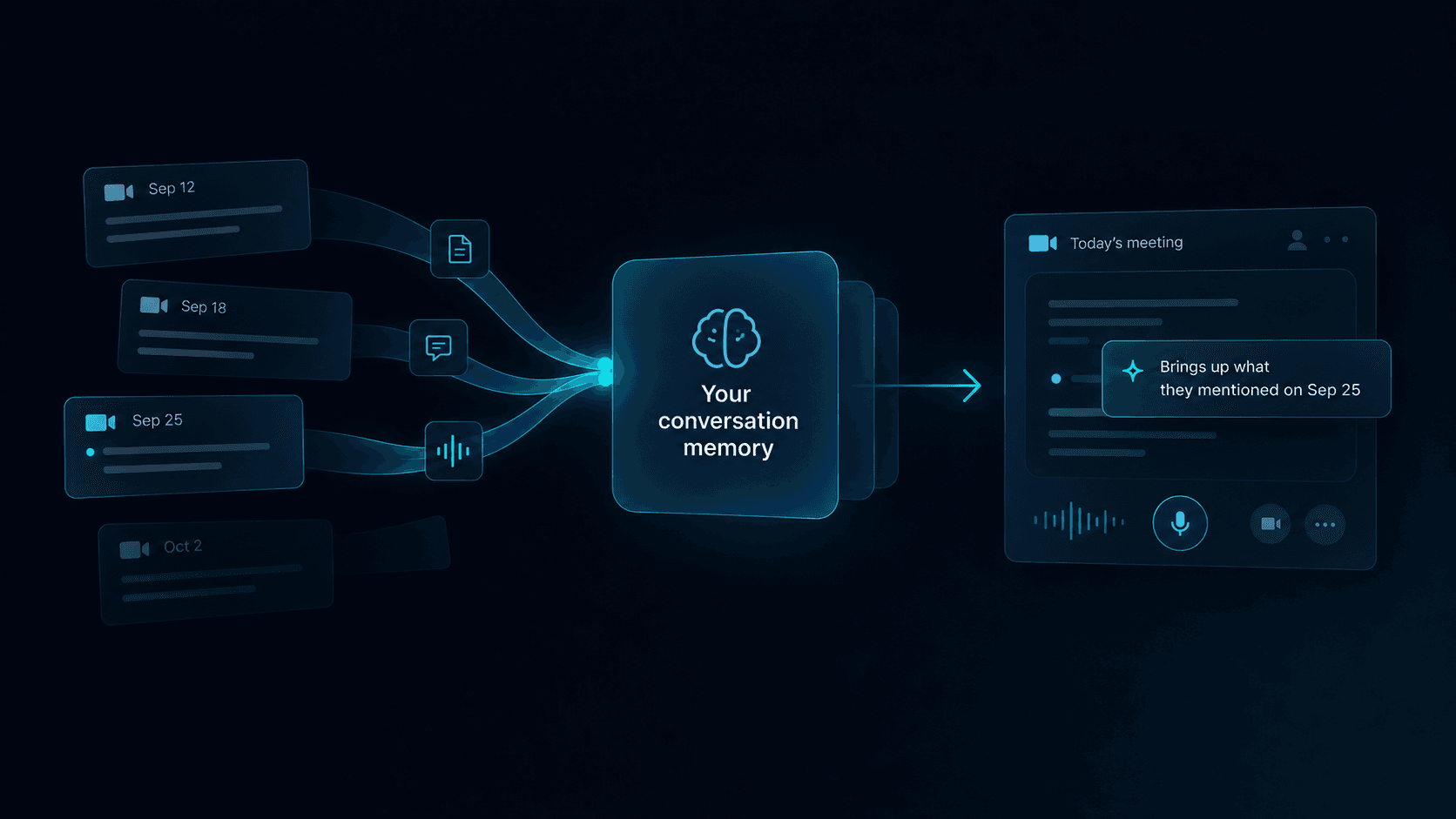
Real-time assistance can use the active conversation to help determine which pieces of company or account context have become relevant. The useful information may change as quickly as the discussion does, so timing and restraint matter as much as retrieval.
That is the role of in-workflow AI during a sales call: making relevant context available while the conversation is still active, without requiring the rep to follow every suggestion or abandon their own judgment.
kernous works during the call itself. It follows the live conversation and brings relevant product information, account context, and previous commitments into view while the rep still has time to use them.
A script still provides the structure. kernous helps with the moments the script did not prepare for, and the rep decides how the conversation should move from there.
FAQ
What is an example of a sales script?
A simple sales script follows this structure: open with context that earns attention, ask one discovery question, connect the answer to a relevant value statement, handle the first objection, and close with a specific next step. The exact words should change based on the prospect, but the structure should stay consistent across calls.
What should a sales script include?
A complete sales script covers five moments: an opener that earns attention, a bridge into discovery, a set of open discovery questions, responses to common objections, and a clear next step close. A focused script that handles these moments can be easier to use during a live call than one that tries to cover every scenario.
How long should a sales script be?
For live use, a sales script should be short enough to scan without pulling attention away from the conversation. Keep openers and value statements concise, and organize discovery questions and objection responses so reps can find them quickly. The useful standard is scanability rather than a fixed page count.
Is it better to use a script or go off the cuff?
A memorized framework gives the call a consistent shape, while flexible language lets the rep respond to what the prospect says. Reps can keep the intent of each phase in mind and adjust the exact words as the conversation develops.
How do you write a sales script that sounds natural?
Write in the language you actually speak, not in the language of a marketing document. Read every line out loud before finalizing it. Cut anything that would make a listener think they are being pitched at. The test is whether a stranger hearing the call could tell a script was involved — if they can, shorten and simplify until they cannot.