A discovery call script should help you sound more present, not more rehearsed.
The point is not to memorize a perfect sequence of questions. It is to have useful language ready for the moments that shape a first conversation: opening the call, setting an agenda, moving into discovery, following an unclear answer, reflecting what you heard, and agreeing on what happens next.
This guide gives you a flexible discovery call script for those moments. Use the wording as a starting point, then adjust it to the prospect, the account, and the conversation in front of you.
Key Takeaways
- A useful discovery call script gives you transitions and follow-up language, not a rigid monologue.
- Start by confirming the time and agreeing on an agenda that makes room for the prospect's priorities.
- When an answer is vague, ask for an example, a recent moment, or the effect on the team before moving on.
- End by summarizing the problem in the prospect's language and agreeing on a next step with an owner and a time.
For the full listening framework and a before/during/after checklist, see the discovery call framework. If you need a more detailed preparation process before the conversation begins, use this sales call preparation guide.
A 30-Minute Discovery Call Script Flow
Use this flow to keep the call moving without treating each section as a deadline. If the prospect gives you a meaningful answer, stay with it. If they are clear and concise, move on.
| Part of the call | Approximate time | What you are trying to do | Flexible language |
|---|---|---|---|
| Opening | 1-2 minutes | Confirm time and make the conversation feel useful | "I have us for 30 minutes. Does that still work on your side?" |
| Agenda | 1-2 minutes | Agree on how to use the time | "I'd like to understand what prompted the conversation, ask a few questions about how you handle it today, and then decide whether a next step makes sense. What would be most useful for you to cover?" |
| Discovery | 12-15 minutes | Understand the current situation, impact, and decision context | "Can you walk me through how that works today?" |
| Summary | 3-4 minutes | Check your understanding before suggesting anything | "Let me make sure I have this right..." |
| Next step | 3-5 minutes | Agree on a specific, useful action | "Based on what you shared, the most useful next step may be..." |
Before the Call: Prepare the Minimum Useful Context
Preparation matters, but you do not need to turn this article into another checklist.
Before the call, make sure you can quickly answer four questions:
- Who are you speaking with?
- What is already known about the account?
- What likely prompted the conversation?
- What do you still need to learn before suggesting a next step?
Review the account history, recent interactions, relevant product context, and any questions the prospect has already raised. The purpose is not to predict the entire conversation. It is to avoid asking the prospect to repeat information your team already has.
For a complete preparation workflow, see the sales call preparation guide.
Start the Discovery Call Without Rushing Into a Pitch
The opening does not need to be clever. It needs to set a calm expectation: this is a two-way conversation, and the prospect's situation comes before your product.
Start by confirming the time.
"Thanks for making time today. I have us down for 30 minutes — does that still work for you?"
Then propose an agenda that leaves room for their priorities.
"I thought we could start with what prompted you to take the conversation, talk through how you are handling it today, and then decide whether it makes sense to go deeper. Is there anything you want to make sure we cover?"
This does three useful things. It respects the prospect's time, tells them you are not about to launch into a generic demo, and gives them a chance to redirect the call before you get too far into your plan.
If they name a priority, acknowledge it and use it to enter discovery.
"Absolutely. Before we get into that, could you tell me a little more about what is making that important now?"
That transition is simple, but it matters. You are not changing the subject. You are showing that their question is the place to begin.
Move From the Opening Into Discovery
Once the agenda is clear, do not stack several questions at once. Ask for the story behind the meeting, then follow the detail that seems most consequential.
One reliable discovery opener is:
"What made this worth looking at now?"
It is short enough to sound natural and broad enough to surface the prospect's own framing. Depending on their answer, you can take a more specific path:
- If they mention a change: "What changed, and how is that affecting the team?"
- If they name a problem: "Can you walk me through the last time that happened?"
- If they ask about a capability: "What are you hoping that would make easier?"
- If they describe a goal: "What is getting in the way of that today?"
The goal is not to complete a question list. It is to turn a topic into a concrete situation you can understand together.
How to Follow Up When the Prospect Gives a Vague Answer
Vague answers are common because buyers often begin with a label: "visibility," "efficiency," "better process," or "we need the team aligned." Treat those labels as a starting point, not an answer to record and move past.
Use one of these follow-up moves.
Ask for a recent example
"When you say visibility, what does that look like in a recent week?"
A recent example moves the discussion from an abstract problem to people, steps, and consequences.
Ask what happens next
"When that happens, what does the team have to do differently?"
This helps you understand the operational cost without forcing the prospect to invent a precise metric on the spot.
Ask who feels the effect
"Who notices that problem first, and who else is affected by it?"
This can reveal a stakeholder, a handoff, or a decision concern that was not visible in the original answer.
Ask what a better outcome would change
"If that part worked the way you want it to, what would be different for the team?"
This shifts the conversation from a feature request to the outcome the prospect is trying to create.
You do not need all four questions. Choose the one that makes the answer more specific. Then pause. A good follow-up gives the prospect room to think rather than making them feel cross-examined.
Use a Summary to Check the Shape of the Problem
Before you suggest a solution, reflect the situation back in plain language. A summary is not a recap for your notes. It is a way for the prospect to correct, refine, or add meaning to what they have told you.
Try this structure:
"Let me make sure I have this right. Today, [current situation] is making it harder to [desired outcome]. The part that seems most urgent is [impact or trigger], and you also need to understand [open question or decision concern]. Did I capture that accurately?"
For example:
"Let me make sure I have this right. Your team has the information they need somewhere, but it is difficult to use during live conversations. That is creating inconsistent follow-up and slowing down newer reps. Before you decide what to change, you need to know whether the support can fit the way your team already works. Is that accurate?"
If the prospect says yes, you have permission to connect only the relevant part of your offering to what they described. If they add or correct something, that is useful discovery, not a detour.
Confirm a Specific Next Step
A strong discovery call does not end with a vague promise to "send something over." It ends with a shared reason for the next conversation and a clear commitment from both sides.
First, name why a next step could be useful.
"Based on what you shared, it seems most useful to look at how this would work for your current process and the people involved."
Then make the ask concrete.
"Would it make sense to bring in [relevant person] for a 30-minute working session next week? We could focus on [specific question], and I can come prepared with [specific material]."
Before you finish, confirm the details:
- Who should attend?
- What will each side prepare or send?
- What specific question will the next meeting answer?
- When is it on the calendar?
If a next step is not justified yet, say so directly. You can agree on a smaller action instead: send a relevant example, confirm a technical detail, or reconnect after a stated event. Clarity is better than creating calendar activity that does not help the buyer decide.
Make Context Available During the Call
Preparation gives you a useful starting point. It cannot predict every detail a prospect will raise during a live conversation.
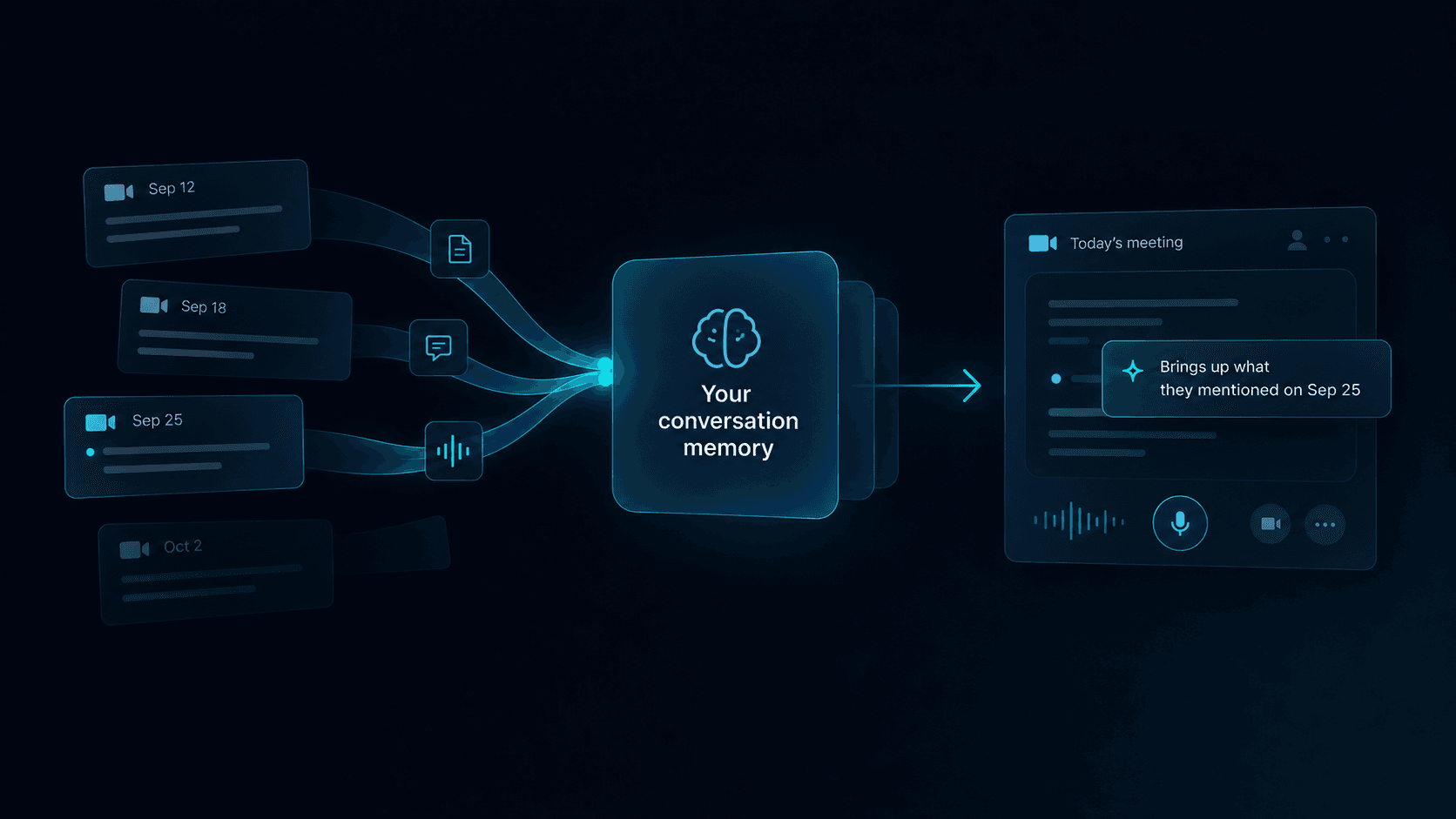
That is where real-time sales coaching is different from pre-call preparation: preparation gives the rep a hypothesis and known account context before the meeting; during-call support makes a relevant cue, prior note, approved answer, or follow-up angle available when the conversation changes.
For a closer look at how reps can access account context, product knowledge, and approved guidance without leaving the conversation, see how to find the right information during a sales call.
kernous is designed for that narrower job. It can surface relevant context and a useful next move while the rep stays in the conversation. The rep still decides what matters, how to phrase it, and whether to follow the signal.
How to Use a Discovery Call Script Without Sounding Scripted
The fastest way to sound scripted is to memorize whole paragraphs. The prospect says something unexpected, and you either ignore it or search for the next line.
Instead, memorize the purpose of each section and keep a few short transitions available:
- Open: confirm the time and invite their priorities.
- Discover: ask for the story, not just the label.
- Deepen: ask for an example, impact, or outcome when an answer is unclear.
- Summarize: use their words to check your understanding.
- Advance: agree on the next useful decision, owner, and time.
Use your own language. If you would never say "Could you elaborate?" in a normal conversation, replace it with "Can you say a little more about that?" The script should make you easier to follow, not make you sound unlike yourself.
Summary
The best discovery call script is a flexible path: open with a shared agenda, invite the prospect's story, follow the details that matter, summarize before you prescribe, and leave with a next step both sides understand.
That summary should also become the foundation of your post-call record. Use the sales call notes guide to capture the trigger, impact, decision context, open questions, and agreed next step while the conversation is still fresh.
FAQ
What is a discovery call script?
A discovery call script is a set of flexible phrases for opening a B2B sales conversation, moving into discovery, following up on unclear answers, summarizing what you learned, and agreeing on a next step. It should guide the flow without dictating every word.
What should I say at the start of a discovery call?
Confirm the time, propose a short agenda, and ask what the prospect wants to make sure you cover. Then use a question such as "What made this worth looking at now?" to move naturally into their situation.
How do I follow up on a vague discovery answer?
Ask for a recent example, what happens when the issue occurs, who feels the effect, or what a better outcome would change. Choose one question that makes the answer more specific, then give the prospect time to respond.
What belongs on a discovery call checklist?
A practical discovery call checklist includes the account context you already know, the prospect's priority, the current situation, impact, people involved, open decision questions, and a specific next step. It should help you stay oriented, not turn the conversation into an interview.
How do you close a discovery call?
Summarize the situation in the prospect's language, confirm that you understood it, and propose the next action that answers the remaining question. Confirm who will attend, what each side will prepare, and when the meeting or follow-up will happen.