A prospect asks a question you did not prepare for.
You know part of the answer, but not enough to say it confidently. The detail may depend on the customer’s setup, the plan being discussed, or a technical limitation you cannot confirm from memory.
The call is still moving. The prospect is waiting.
In that moment, the goal is not to produce an immediate answer at any cost. It is to choose the response that protects the conversation and gives the prospect reliable information.
Sometimes that means answering directly. Sometimes the question needs clarification. In other cases, the detail should be verified or carried into a specific follow-up.
The quality of the response depends less on how quickly the rep speaks and more on whether they understand which of those paths the question requires.
Key Takeaways
- An unanswered question does not automatically require a delayed response; it may first require clarification.
- Answer directly only when the information is sufficiently current, specific, and reliable.
- Pricing, security, legal, technical, and customer-specific commitments often require verification.
- A good follow-up identifies the exact question, the owner, the next action, and when the prospect will receive an answer.
- Credibility comes from setting a clear boundary around what is known, what still needs confirmation, and what happens next.
Why Uncertain Answers Create More Risk Than a Brief Pause
Sales conversations reward responsiveness. Reps are expected to understand the product, respond to concerns, and keep the discussion moving.
That pressure can make uncertainty feel like a failure.
A rep may fill the silence with an incomplete answer, rely on a detail remembered from another account, or make a promise that sounds reasonable in the moment. The conversation continues, but the team inherits a new problem afterward.
The answer may be technically inaccurate. A feature may only be available under certain conditions. A pricing exception from another deal may be mistaken for standard policy. A tentative roadmap item may sound like a confirmed commitment.
A brief pause or a clear follow-up is usually easier to repair than misplaced confidence.
The rep does not need perfect knowledge of every possible topic. They do need to recognize the point where their current knowledge is no longer sufficient for a reliable answer.
Four Ways to Respond to an Unexpected Question
Most questions that create uncertainty can be handled through one of four response paths:
| Response path | Use it when | Main goal |
|---|---|---|
| Answer | The question is clear and the information is reliable | Give a concise response and continue |
| Clarify | The question is broad, ambiguous, or based on an unstated concern | Understand what the prospect is actually trying to decide |
| Verify | You know the likely answer but need to confirm a detail | Avoid turning partial knowledge into a commitment |
| Follow up | The answer depends on another person, custom requirement, or additional investigation | Define a specific next action and close the loop |
The right choice depends on the question, the source of the information, and the consequence of getting it wrong.
Answer When the Information Is Clear
A direct answer works when the question is specific and the rep has current, approved information.
For example:
Is this included in the standard plan?
If the rep can confirm the applicable plan and knows the current packaging, a concise response may be enough:
Yes, that capability is included in the standard plan. The main difference is how permissions are configured.
The answer should match the size of the question. A prospect who asks whether something is included usually does not need a long tour of every related capability.
Start with the direct answer, add the condition that matters, and let the prospect decide whether to go deeper.
Clarify When the Question Is Too Broad
Some questions sound answerable but contain several possible meanings.
Will this work with our current setup?
“Current setup” could refer to a technical integration, an internal process, data migration, team adoption, or implementation effort.
Searching for an answer too early may lead the rep toward the wrong issue. A short clarification can narrow the conversation:
Are you mainly thinking about the technical connection, or whether your team would need to change its current workflow?
The prospect’s response reveals what they are actually evaluating.
Broad questions such as “Is this secure?”, “Can this scale?”, or “Would this work for our team?” often benefit from the same approach. The rep can then respond to the requirement behind the question instead of offering a general statement that does not resolve the concern.
This is closely related to the listening skills used in a strong discovery call: the first version of the question is not always the full question.
Verify When the General Answer Is Known but the Detail Matters
A rep may have a strong sense of the answer while still needing to check a condition.
For example:
Can users in different regions have separate data retention settings?
The rep may know that regional controls exist, but the exact behavior may depend on the customer’s plan, deployment, or configuration.
A useful response separates the confirmed part from the detail that still needs verification:
Regional controls are supported. I want to confirm whether retention can be configured separately at the level you described before I give you a definitive answer.
This keeps the conversation moving without presenting the unverified detail as fact.
Verification is especially important when the answer could influence procurement, implementation, security review, legal approval, or the prospect’s decision to continue.
Follow Up When the Answer Requires Additional Work
Some questions cannot be resolved responsibly during the call.
They may involve:
- Custom pricing
- Contract terms
- Legal or compliance interpretation
- A customer-specific integration
- An unusual implementation requirement
- A feature commitment that has not been approved
- Input from a technical or operational owner
A useful follow-up should be more specific than “I’ll check with the team.”
The prospect should know what will be confirmed and when they can expect the answer:
I need to confirm whether the current API supports account-level permission rules for that workflow. I’ll check with our product team and send you the answer by Thursday.
That response creates a clear expectation. It also gives the internal owner enough information to investigate the correct question.
How to Decide Which Response Path to Use
A few quick checks can help the rep decide how to respond.
Is the Question Clear?
Before answering, make sure the rep and the prospect are discussing the same thing.
Terms such as “integration,” “security,” “automation,” and “support” can refer to different requirements. Clarification is often the fastest path to a useful answer.
How Reliable Is the Information?
The rep should know whether the answer comes from current documentation, an approved commercial source, a previous customer conversation, or personal memory.
A detail heard informally several months ago should not carry the same confidence as an approved source updated this week.
What Happens If the Answer Is Wrong?
The consequence matters.
A small workflow detail may be easy to correct later. A statement about pricing, security, compliance, implementation scope, or contractual availability can influence a major decision.
The higher the consequence, the stronger the reason to verify.
Does the Answer Depend on This Customer’s Situation?
A general capability may exist while the customer’s specific requirement remains unconfirmed.
For example, the product may support data exports, but the prospect may be asking about a particular format, frequency, region, or permission model.
A general “yes” can become misleading when the actual question is more specific.
What to Say When You Cannot Answer Confidently
The wording should communicate control rather than panic.
The rep can acknowledge the question, explain the boundary, and define the next step without giving a long apology.
When You Know the General Answer
The general answer is yes. I want to verify how it applies to the setup you described before I confirm the exact behavior.
When You Need Another Person’s Input
That depends on the implementation approach. I’ll confirm it with the person who owns that area and send you the specific answer.
When the Question Has Several Meanings
Before I answer, can I check which part matters most: the technical setup, the rollout effort, or what the team would need to change?
When You Do Not Want to Guess
I don’t want to give you an answer that sounds certain and then revise it later. Let me confirm that detail and include the source in the follow-up.
When Part of the Question Can Be Answered Now
I can answer the workflow part now. The data-retention requirement needs confirmation because it depends on the account configuration.
These responses show that the rep understands the question and knows how to resolve it.
They also prevent uncertainty from turning into vague language such as “probably,” “I think,” or “it should.”
When You Should Avoid Answering From Memory
Memory is useful for navigating a conversation, but some topics change frequently or carry more risk.
Pricing and Packaging
Plans, included features, minimums, and commercial terms may change. A custom agreement for one account may not apply to another.
Product Availability
A capability may be generally available, limited to certain plans, in beta, or planned for a later release.
Security and Data Handling
Security questions often require precise language and approved documentation. General reassurance is rarely enough.
Technical Limitations
A rep may remember the intended workflow without knowing a specific limit, dependency, or configuration requirement.
Legal and Compliance Questions
The rep should avoid interpreting legal obligations or presenting a general product statement as formal compliance guidance.
Customer-Specific Commitments
An exception made for a previous customer should not quietly become a promise to the current one.
In these areas, the rep can still be helpful. They can clarify the requirement, share what is already confirmed, and define the verification step.
Keep the Conversation Moving While an Answer Is Pending
An unanswered question does not always need to stop the discussion.
Once the rep has captured it, they can decide whether another part of the conversation can continue.
For example:
I’ll verify the exact retention setting after the call. While we’re on this workflow, can you walk me through who needs access to the data and how often?
The follow-up question keeps the discussion focused on the underlying requirement. It may also reveal information that makes the eventual answer more useful.
The rep should avoid repeatedly returning to the unresolved question unless new information changes it. Once the boundary and follow-up are clear, the conversation can move forward.
Capture the Question So the Follow-Up Is Useful
The quality of a follow-up depends on what gets recorded.
A note such as:
Ask product about API.
does not preserve enough context.
A stronger note would be:
Confirm whether the API supports account-level permission rules for exported records. The prospect needs this before deciding whether security should join the next meeting. Product owns the answer; respond by Thursday.
A useful record captures:
- The prospect’s exact question
- The requirement behind it
- What has already been confirmed
- What remains uncertain
- Who owns the answer
- When the response is due
- Whether it should shape the next meeting
This information should also appear in the sales call notes, so the next conversation does not begin by reopening the same uncertainty.
Make the Follow-Up Easy to Trust
When the answer arrives, the response should connect back to the original question.
A useful follow-up includes the confirmed answer, any condition that changes it, and the source when the detail is important.
For example:
Following up on your question about account-level permission rules: the API supports them for exported records when role-based access is enabled. I’ve included the relevant documentation below. The remaining question is whether your current identity setup maps directly to those roles, which we can review with your technical team.
This gives the prospect a usable answer while making the remaining boundary visible.
Avoid sending a large document without indicating where the answer is located. The prospect should not have to reconstruct the reasoning from the attachment.
Where Real-Time Information Support Helps
Sometimes the answer already exists in approved company knowledge, earlier conversations, or product documentation. The challenge is reaching the relevant information while the discussion is still active.
Real-time information support can help surface a concise answer and its source, especially when the question is specific and time-sensitive.
That capability does not remove the need to clarify the question or judge whether the information applies to the current customer. It gives the rep better material for making that decision.
The retrieval side of this problem is covered in how to find the right information during a sales call.
For a broader view of how context, cues, and next-step guidance can appear during a live conversation, see real-time sales coaching.
Where kernous Fits
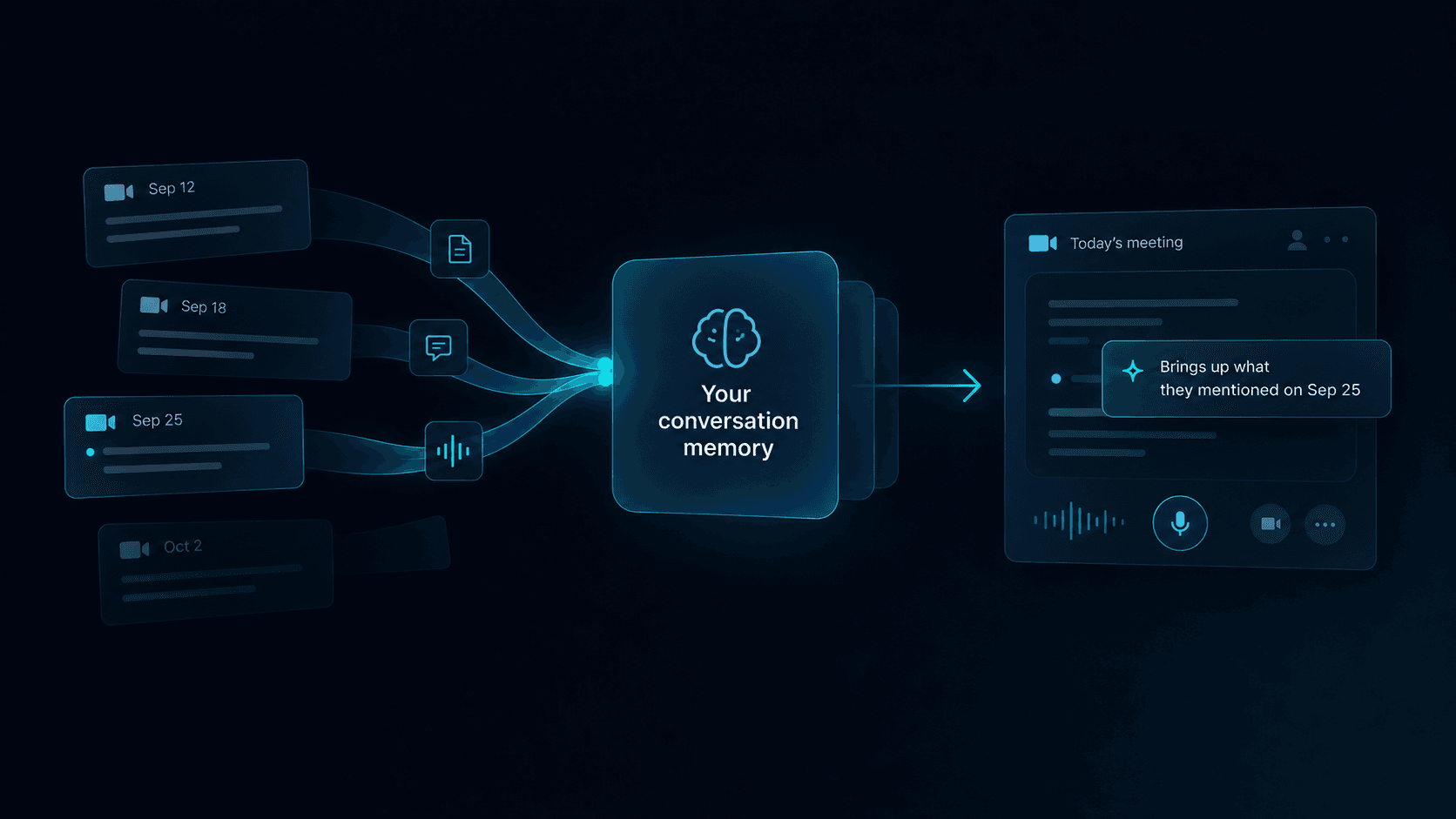
kernous helps keep relevant context available when a live conversation moves beyond what the participant prepared.
An unexpected question may connect to company knowledge, an earlier conversation, a previous commitment, or a detail that needs verification. Bringing that context closer to the conversation can reduce the time spent searching and make the boundary between confirmed and uncertain information easier to see.
The participant still decides how to respond.
They may answer directly, clarify the requirement, verify a detail, or define a follow-up. kernous supports that judgment by making the relevant context easier to reach while the conversation is still happening.
FAQ
What should a sales rep do when they do not know an answer?
The rep should first decide whether the question needs clarification, verification, or a follow-up. They can explain what is already known, identify the uncertain detail, and give the prospect a specific plan for resolving it.
Is it bad to say you do not know during a sales call?
No. A clear boundary is usually more credible than an uncertain answer presented as fact. The rep should avoid stopping at “I don’t know” and explain what they will confirm, who will own it, and when the prospect can expect a response.
When should a sales rep answer a question later?
A later response is appropriate when the question involves custom pricing, security, legal or compliance details, technical limitations, customer-specific requirements, or information that cannot be confirmed from an approved source during the call.
How can a sales rep keep the conversation moving without an answer?
Capture the unresolved question, explain the follow-up, and continue discussing the underlying requirement or another relevant topic. The rep can often learn more about why the answer matters while the detail is being verified.
What should be included in a sales follow-up answer?
Include the original question, the confirmed answer, any important conditions, the source when relevant, and the next step. If part of the issue remains unresolved, make that boundary clear.
Can AI answer unexpected questions during a sales call?
AI can help retrieve relevant information and surface its source, but the participant still needs to confirm that the information is current, reliable, and applicable to the situation. The final response remains a human judgment.