A customer call ends.
Everyone leaves with the feeling that the conversation went well. A few decisions were made. Someone promised to send something. One question still needs an answer. The next meeting is tentatively on the calendar.
Then the details start to drift.
A promise becomes a vague follow-up. A question loses its owner. Two people leave with different interpretations of what was decided. By the time the next conversation arrives, the team has the transcript, the summary, and plenty of notes — but still has to reconstruct what actually needs to happen next.
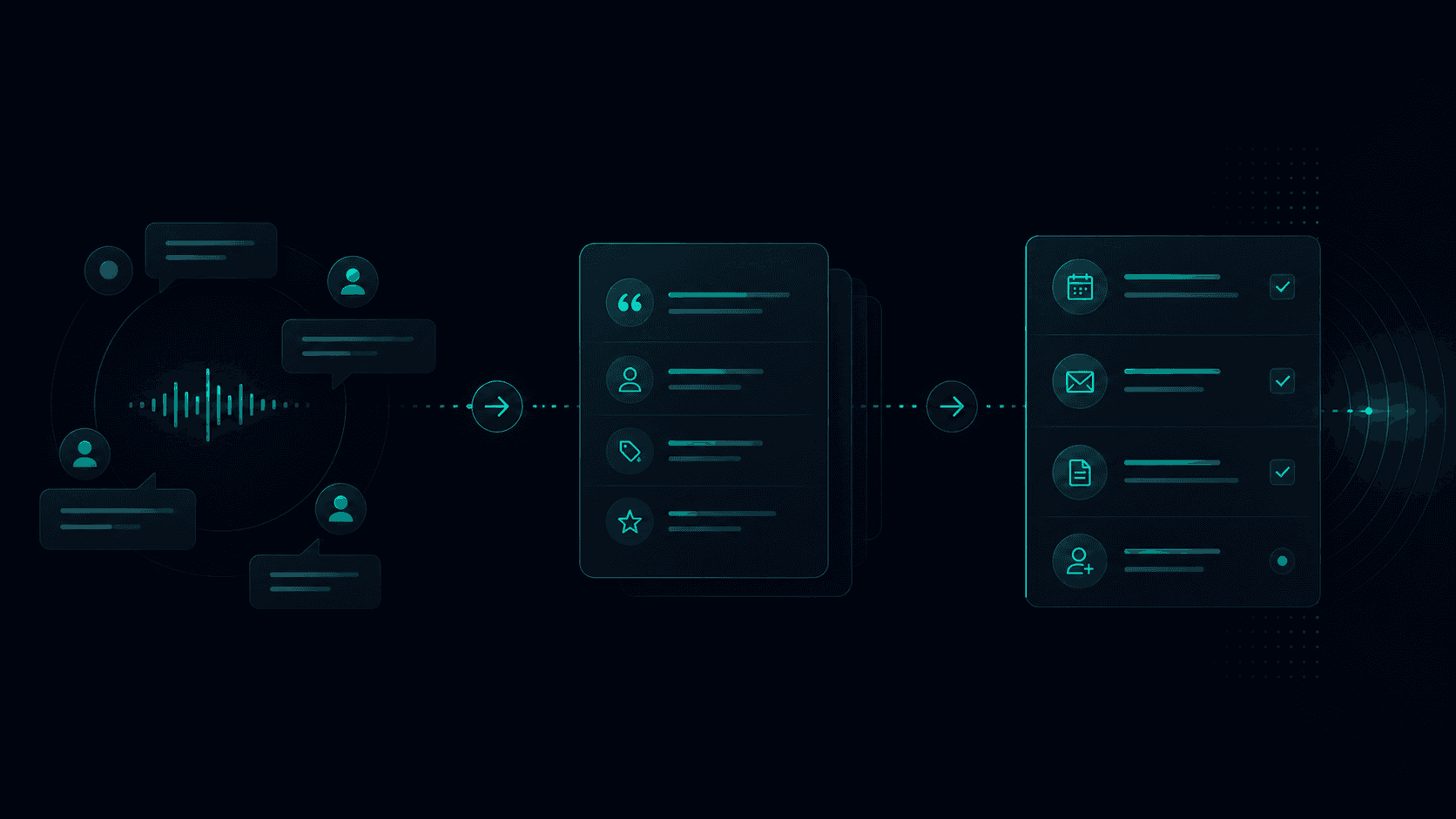
A useful sales call recap should turn the conversation into something the team can act on.
A strong post-call workflow answers five questions — then passes two checks before anything gets sent.
- What changed?
- What was decided?
- What was promised?
- What is still unresolved?
- What does the next conversation need?
The two checks are:
- Did we preserve the strength of what the customer actually said?
- Does the customer-facing follow-up match the internal record?
There’s a copyable recap template at the end of this guide.
Key Takeaways
- Start with what changed during the conversation, not a chronological replay of the entire call.
- Separate decisions from working directions and topics that were only discussed.
- Every commitment should have an owner, an action, and some sense of timing.
- Open questions need to remain visible after the meeting ends.
- Preserve whether something was a fact, preference, concern, possibility, or commitment.
- The internal record and the customer-facing follow-up should describe the same outcome.
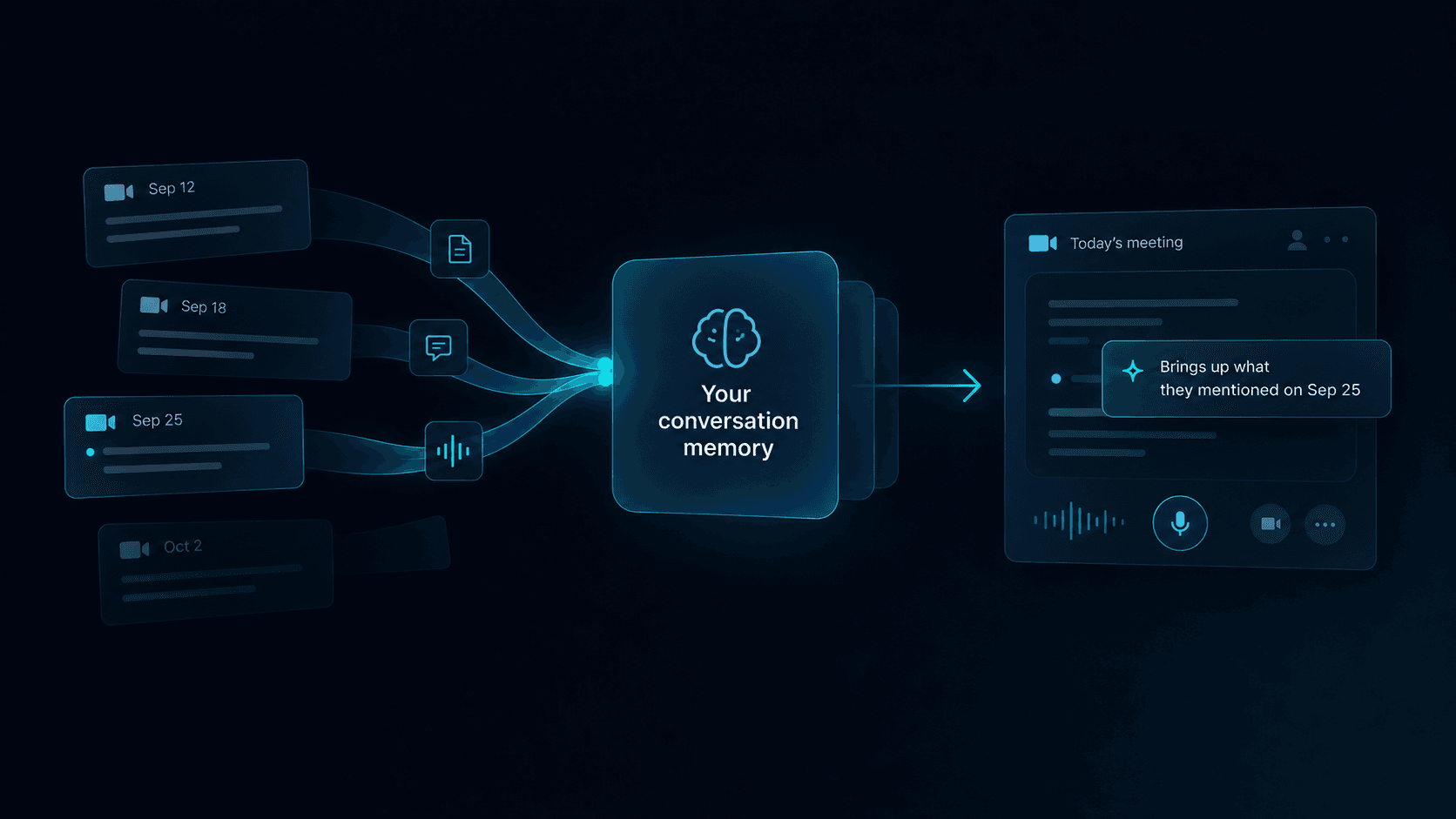
- What survives after one conversation becomes part of the context available before the next.
1. What Changed?
The easiest post-call habit is to summarize the meeting from beginning to end.
That often produces a complete record and a weak handoff.
The more useful starting point is the delta: what is different now compared with before the conversation started?
The customer may have changed priorities, made a timeline more concrete, raised a new blocker, or introduced another stakeholder who now needs to be involved.
A useful recap begins with:
What do we know now that we did not know before this conversation?
For example:
Before the call: The customer wanted to launch in October.
After the call:
October is still the preferred launch window, but security review must happen first and may affect the timeline.
“Launch timing was discussed” captures the topic.
The second version captures the state of the relationship.
That distinction matters because future conversations depend on what changed.
2. What Was Actually Decided?
Customer conversations contain plenty of language that sounds more final once it gets written down.
Someone says:
“That could work.”
Another person says:
“October would probably be ideal.”
Or:
“We should bring legal into this.”
Those statements carry different levels of commitment.
After a meeting, teams often compress them.
Possibilities become plans. Preferences become requirements. Suggestions become commitments.
A better recap keeps three categories separate:
Decision
Something was clearly agreed.
The next review will happen on September 12.
Working direction
The conversation moved toward an option, but something still needs to happen first.
The team is leaning toward an October launch, pending security review.
Discussion
The topic came up, but there is no shared direction yet.
The customer asked whether SSO could be included in the first rollout.
These distinctions determine whether the next person enters the relationship with accurate context or an assumption that hardened after the call.
If the main goal is deciding what information belongs in the record at all, our guide to sales call notes covers that capture layer in more detail.
This article focuses on the next step: turning that record into action.
3. What Was Promised?
Customer calls often end with language like:
“We’ll send that over.”
“I’ll check with the team.”
“We can follow up on that.”
The commitment feels obvious while everyone still shares the memory of the meeting.
A day later, the ambiguity becomes visible.
Who is “we”? What exactly needs to happen? When should it happen?
A usable commitment has three parts:
Owner → Action → Timing
| During the call | After the call |
|---|---|
| “We’ll send the security documentation.” | Maya → send security documentation → by Friday |
| “I’ll confirm that internally.” | Jordan → confirm implementation timeline with product → before next meeting |
| “Let’s bring legal in.” | Priya → invite legal stakeholder → before contract review |
Timing does not always need to mean a fixed deadline.
“Before the next meeting” can be enough.
The point is to remove the ambiguity that appears once the shared memory of the conversation fades.
This also makes the customer follow-up easier. The next steps are already clear before anyone starts writing the email.
4. What Is Still Unresolved?
A productive customer conversation can end with unanswered questions.
The important part is making sure those questions survive the meeting.
An open question may depend on research, another internal team, a customer decision, or a future milestone. Its importance may also change as the relationship moves forward.
Each unresolved question should leave the call with a visible status.
For example:
Question: Can the customer keep the current workflow during migration? Owner: Implementation team Next action: Confirm supported migration path Needed by: Before solution review
This keeps the question attached to the work required to resolve it.
Our guide to handling unanswered questions during sales calls covers how to respond when the answer is missing in the live moment. The post-call step makes sure the question stays visible afterward.
An unanswered question with no owner often becomes a question the customer has to ask twice.
5. What Does the Next Conversation Need?
The last question looks forward:
What should someone know before the next conversation begins?
The useful answer is usually much smaller than the complete record.
It may include:
- the current objective
- decisions made
- commitments still in progress
- unresolved questions
- important changes
- risks or concerns
- the next expected milestone
This is where After connects back to Before.
What survives this conversation becomes part of the context available for preparation next time.
That becomes especially important when the person joining the next conversation was not part of the one before it, as in a customer kickoff.
That is also the role of conversation continuity: each interaction should begin from what the relationship already knows.
The broader Before, During, and After framework helps locate where that flow is breaking.
If the information exists after the call but never reaches the person preparing for the next one, the problem has shifted into the Before stage.
Check 1: Preserve the Strength of What the Customer Actually Said
A surprising amount of context changes after the conversation ends.
Imagine a customer says:
“October would be ideal, but we still need to understand what security review looks like.”
The internal record later becomes:
Customer requires October launch.
The shorter version also changes the meaning.
The original statement contained a preference, a condition, and uncertainty.
The rewritten version turns all three into a requirement.
That shift affects the next conversation.
It happens in smaller ways too:
“I’m curious about…” → “Customer wants…”
“This might be a concern…” → “Customer blocker…”
“We could consider…” → “Customer agreed…”
A useful recap preserves whether something was a fact, preference, possibility, concern, or commitment.
When the distinction matters, the team should still be able to understand how the interpretation was formed.
That keeps the internal version of the relationship closer to the conversation the customer actually remembers.
Check 2: Does the Follow-Up Match the Internal Record?
The internal record and the customer-facing follow-up serve different audiences.
They should still describe the same outcome.
Internally, the team may capture:
- why a decision was made
- ownership
- risks
- unresolved questions
- dependencies
- account context
The customer-facing version can be shorter:
Thanks for today. We aligned on completing the security review before finalizing the October launch timeline. Maya will send the security documentation by Friday, and we’ll confirm the implementation timeline before our next meeting on September 12.
The customer does not need every internal detail.
But the follow-up should preserve the same decisions, conditions, and level of certainty.
If the internal record says the timeline is still conditional while the email says:
“We’re confirmed for October.”
the team has created a future context problem for itself.
A useful final check is:
Would the customer recognize this follow-up as the same conversation we just had?
If the answer feels uncertain, review the record before sending it.
Copyable Sales Call Recap Template
Use this immediately after a customer conversation:
- What changed: —
- Decisions: —
- Working direction (conditional): —
- Commitments: Owner → Action → Timing
- Open questions: Question → Owner → Next action → Needed by
- Customer wording worth preserving: —
- Carry forward to next conversation: —
- Customer-facing follow-up: —
The template is deliberately shorter than a full meeting record.
Its job is to turn what happened into a usable state for the next action and the next conversation.
The Call Is Over. The Conversation Is Still Moving
A customer conversation changes the state of the relationship.
New information appears. Decisions move forward. Commitments create expectations, and unresolved questions shape what needs to happen next.
The quality of the recap determines whether those changes stay usable.
They matter before the next conversation, when someone needs to understand what already happened.
They can also matter during the next conversation, when an earlier decision or commitment suddenly becomes relevant again.
kernous focuses on that during stage — the live-call gap between information an organization already has and what a person can actually use while the conversation is moving.
The better the context that survives each conversation, the more useful that organizational memory can become when the next conversation takes an unexpected turn.
FAQ
What is a sales call recap?
A sales call recap is a concise record of what changed during a customer conversation, what was decided, what was promised, what remains unresolved, and what needs to happen next.
What should you do immediately after a customer call?
Identify what changed, confirm any decisions, assign commitments, keep unresolved questions visible, and capture the context that will matter in the next interaction.
What should a sales call recap include?
A useful recap usually includes decisions, working directions, commitments with owners and timing, open questions, important customer context, and the information that should carry into the next conversation.
How do you track commitments after a customer meeting?
Record each commitment as Owner → Action → Timing. This makes it clear who is responsible, what needs to happen, and when the commitment should be completed.
How is a sales call recap different from sales call notes?
Sales call notes capture useful information from the conversation. A recap takes the parts that matter afterward and turns them into decisions, ownership, next steps, and context that can move forward.