A useful way to diagnose a conversation that went wrong is to finish one sentence:
“We would have handled that conversation better if we had known ______ at the right time.”
Then ask one more question:
When should that information have become usable?
Before the conversation started?
While the conversation was happening?
Or after the conversation ended, so the next one could begin with the right context?
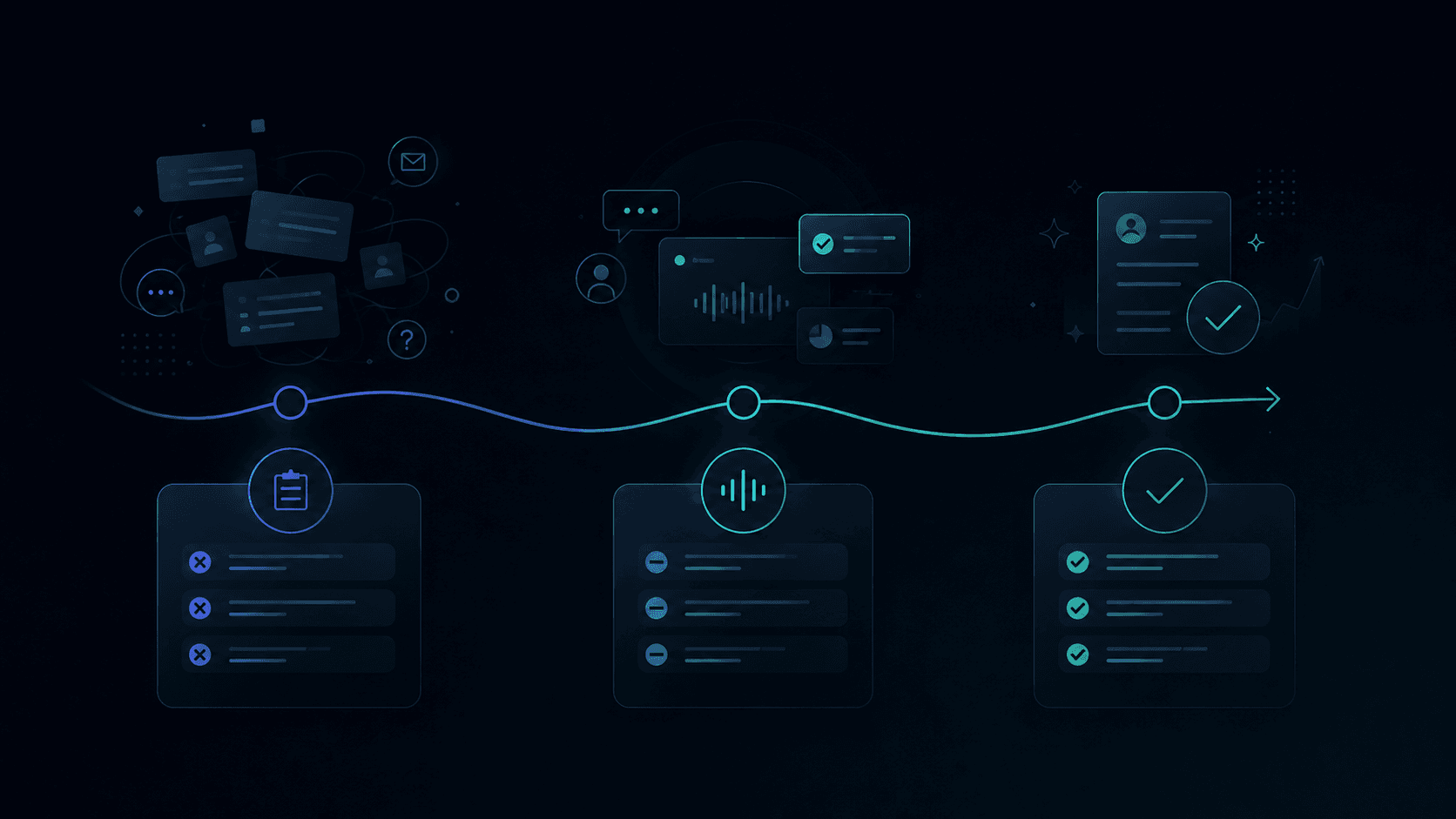
Those are three different information problems. They often look similar from the outside, which is why teams end up improving the wrong part of the workflow.
Someone joins without enough history. A customer asks a question and the answer takes too long to find. An important commitment disappears between meetings. The next person asks for information the customer already shared.
The common thread is context. The breakdown happens at a different moment.
| Stage | The question to ask |
|---|---|
| Before | Do I have the context I should reasonably know before this conversation starts? |
| During | Can I use the right information while the conversation is changing? |
| After | Will what matters from this conversation still be usable next time? |
Key Takeaways
- Start by locating the moment where context becomes unusable: before, during, or after the conversation.
- Before problems usually mean relevant context existed but never made it into preparation.
- During problems appear when information exists but cannot reach the person quickly enough while the conversation is moving.
- After problems happen when decisions, commitments, and context fail to carry into the next interaction.
1. Before the Conversation: The Context Never Made It Into the Room
Some conversation problems begin before anyone joins the call.
The person may know the meeting is happening, but they do not know enough about the relationship behind it: what the customer cares about, what happened last time, what was promised, what remains unresolved, or what changed since the previous interaction.
The symptoms are usually familiar:
- the first few minutes are spent reconstructing history
- customers repeat information they have already shared
- previous concerns get missed
- teammates enter with different versions of the account story
- preparation turns into a search across notes, messages, and documents
- important context appears only after the meeting has started
Imagine you are about to speak with a customer for the third time.
The previous conversation raised a concern about implementation timing. Someone promised to confirm an answer. Since then, part of the situation has changed.
If none of that reaches the person preparing for the next conversation, the problem already exists before the meeting begins.
Good preparation brings forward the small amount of context most likely to matter next: previous decisions, unresolved questions, recent changes, customer priorities, and the purpose of the upcoming conversation.
That is the role of a strong sales call preparation process, and it becomes even more important when one conversation is supposed to build directly on another.
Preparation still has a limit. You can prepare for likely directions. A live conversation can always produce a direction nobody expected.
Related reading: Before the conversation
- Sales Call Preparation — what to review before a call without over-preparing.
- Demo Call Preparation — how to carry discovery context into the demo without asking the customer to repeat it.
- Customer Kickoff Call — how to enter a kickoff when you were not part of the sales conversation.
- Discovery Call Framework — what to learn during discovery so the next conversation has something useful to build on.
- How to Structure a Sales Call — a flexible structure for entering a call with a clear path.
2. During the Conversation: The Information Exists, but the Moment Moves Faster
A team can prepare well and still get stuck.
The customer asks something unexpected. They refer to a commitment from an earlier meeting. A new stakeholder introduces a requirement nobody anticipated. A detail from three conversations ago suddenly matters again.
The information may already exist somewhere.
Using it while another person is waiting is the hard part.
Imagine a customer says:
“I thought we already agreed that this would be handled before launch.”
Now someone has to remember that the earlier discussion exists, find it, check what was actually agreed, understand whether anything has changed, and decide how it applies to the current conversation.
All of that happens while the customer is still talking.
Opening another tab, scanning a transcript, or reading a document while someone is waiting all consume attention, and the other person can feel that attention leave the conversation.
This is the live-call gap: the distance between information an organization already has and what a person can actually access and use while a conversation is happening.
The problem goes beyond retrieval speed.
A customer can mention “implementation,” “security,” or “pricing” several times for completely different reasons. The useful context depends on what they mean now, what happened earlier, and what changed in between.
A document that contains the same keyword may be technically relevant and practically useless.
During a live conversation, the more useful question is:
Which part of what we already know matters to this moment?
That is why real-time help during sales calls focuses on making existing account and product context usable while the interaction is still active.
The same principle appears in live conversation support vs. post-call analysis: information that becomes clear after the meeting can still arrive too late to change the moment that needed it.
Related reading: During the conversation
- Real-Time Help During Sales Calls — why existing information becomes difficult to retrieve while a call is moving.
- Real-Time Sales Coaching — a deeper look at how live guidance can support the live-call gap.
- Live Conversation Support vs. Post-Call Analysis — how support during the interaction differs from analysis after it.
- Discovery Call Script — how to keep discovery flexible when the customer takes the conversation somewhere unexpected.
- Objection Handling Scripts — practical responses for common objection moments.
- Objection Handling Techniques — ways to understand and work through an objection without forcing a memorized line.
- Handling Unanswered Questions During Sales Calls — what to do when the customer asks something you cannot answer immediately.
- Sales Script Examples — prepared language that can support common moments while leaving room for the conversation to change.
- Cold Calling Tips — practical ways to handle the earliest live customer conversations.
- What Is a Second Brain for Live Conversations? — the broader idea behind making existing context available while a conversation is happening.
3. After the Conversation: What Happened Does Not Carry Forward
Some conversations work well in the room and still create problems later.
Everyone understands the decision at the time. A concern gets resolved. Someone promises a follow-up. The reasoning behind the next step feels obvious.
Then the meeting ends.
A week later, the decision is buried inside a transcript. The commitment never made it into the notes. Another teammate sees the outcome but has no idea why it was chosen. The next conversation begins and someone has to reconstruct the story.
Common signs include:
- follow-ups depend heavily on memory
- notes vary depending on who wrote them
- decisions survive but their reasoning disappears
- unresolved questions lose their owner
- account history becomes a stack of disconnected summaries
- people reread long transcripts to recover one important detail
- topics return because nobody can tell what was already settled
The useful output from a conversation is usually much smaller than its full record.
Decisions, commitments, open questions, changed priorities, concerns, and the reasoning behind a next step are the pieces that need to travel forward.
That is why sales call notes become valuable when they preserve context another person can actually use.
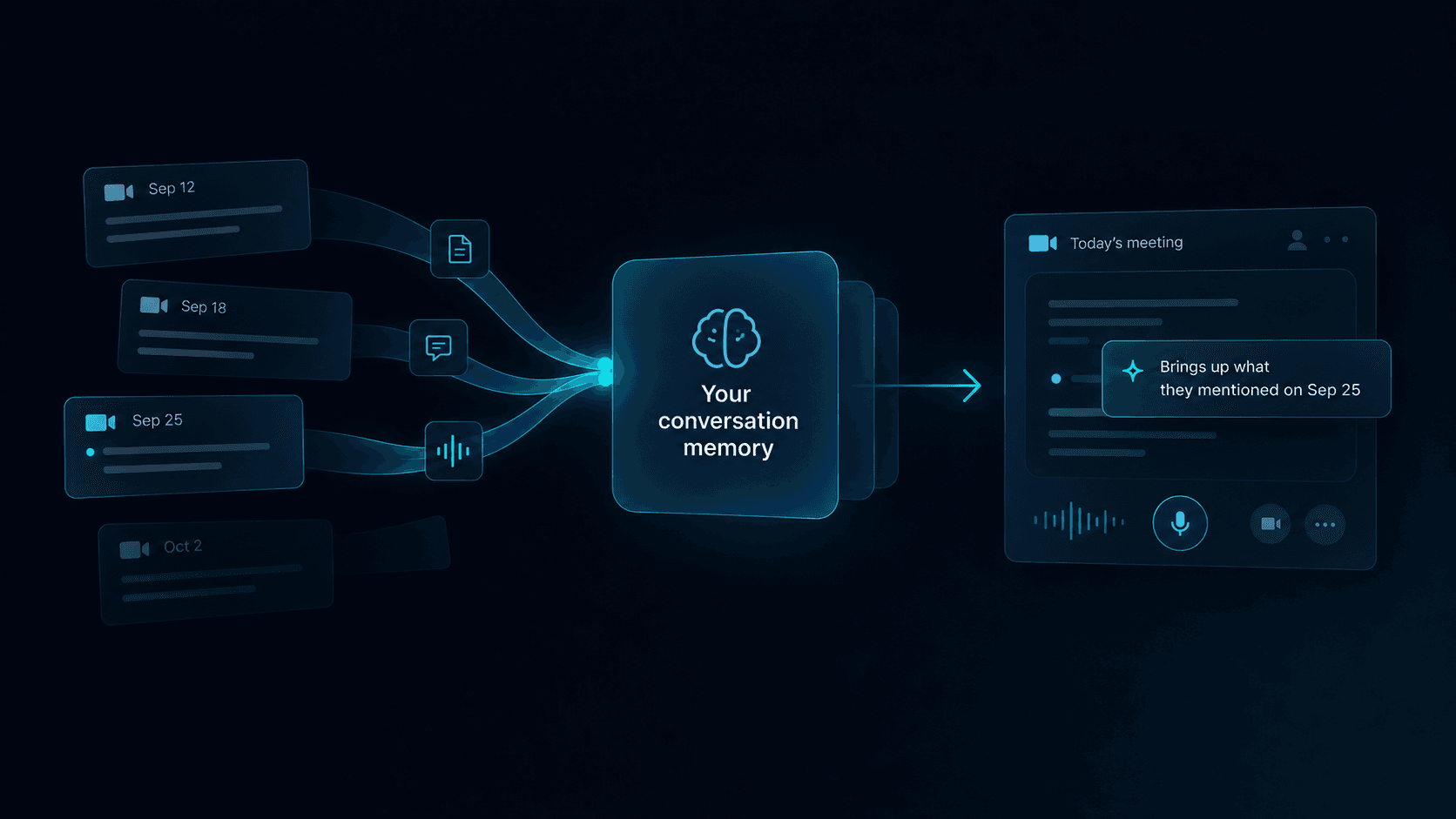
This also creates conversation continuity: the ability for the next interaction to begin from what the relationship already knows.
Related reading: After the conversation
- Sales Call Notes — how to capture the decisions, commitments, risks, and open questions that matter later.
- Sales Call Recap — how to turn decisions, commitments, open questions, and customer context into clear next steps.
- Conversation Continuity — how context carries from one customer conversation into the next.
The Three Stages Form One Loop
Before, during, and after are connected.
What happens after one conversation becomes the context available before the next.
Something captured today may become important during a meeting three months later. A concern raised during one conversation can shape preparation for the next. A new decision then becomes part of the history that carries forward again.
The loop looks simple:
Before Bring forward the context you can reasonably anticipate.
↓
During Make additional context usable when the conversation goes somewhere preparation could not predict.
↓
After Preserve what changed, what was decided, and what still needs attention.
↓
Before the next conversation
When that loop breaks, return to the diagnostic:
“We would have handled that conversation better if we had known ______ at the right time.”
Then locate the failure.
Before: Could we reasonably have known this before the conversation started?
During: Did the information become relevant only once the conversation changed?
After: Did an earlier conversation contain the context, but fail to carry it forward?
That is usually enough to tell you where to investigate first.
Do Not Solve a During Problem With an After Solution
Consider a customer asking a difficult question during a meeting.
The person cannot find the relevant context, gives an incomplete answer, and moves on.
Afterward, everything works.
The transcript is accurate. The summary identifies the question. The follow-up is assigned. Someone finds the missing information and sends a thoughtful answer an hour later.
The post-conversation workflow succeeded.
The customer still experienced the original gap.
They needed the information while the conversation was active.
Post-call analysis remains valuable because the next conversation depends on what gets preserved today. It operates at a different point in the lifecycle.
The reverse is also true. If someone consistently enters a meeting without understanding the account history, adding support later in the interaction leaves a preparation problem untouched.
The stage determines where the fix needs to begin.
Where kernous Focuses
kernous is built around the live-call gap: the moment when relevant context exists somewhere in the organization but is difficult to use while a live conversation is still moving.
The business knowledge, the customer history, the answer from the previous conversation — in many cases, the organization already has all of it.
kernous focuses on the during stage: making relevant context easier to use when it becomes important in the live conversation.
The surrounding stages still shape that moment. Preparation determines what someone already knows going in, and what gets preserved afterward affects the context available next time.
kernous focuses specifically on what happens in between: when the conversation takes an unexpected turn and existing information needs to become useful before the moment moves on.
Because the value of information depends on timing.
An answer found an hour later can be correct and still miss the moment that needed it.
FAQ
Where do information problems usually happen around a business conversation?
They usually appear at one of three stages: before the conversation, when someone enters without enough context; during the conversation, when relevant information cannot be used quickly enough; or after the conversation, when important decisions and context fail to carry forward.
What is the live-call gap?
The live-call gap is the distance between information an organization already has and what a person can actually access and use while a conversation is happening. It becomes visible when a customer raises something unexpected and the relevant context exists somewhere but cannot reach the person before the moment moves on.
Why can good preparation still fail during a live conversation?
Preparation works best for context you can anticipate. Live conversations introduce new questions, stakeholders, objections, and references to earlier interactions. Useful information can become relevant only after the meeting has already changed direction.
Can a good post-call workflow still leave a conversation problem unsolved?
Yes. A transcript, summary, or follow-up can capture a missed question perfectly after the meeting ends. If the customer needed the information during the live interaction, the post-call workflow preserves the issue but does not change the moment where it occurred.