A customer kickoff call is supposed to create momentum.
But for the customer, it can easily feel like a reset.
The sales conversation is over. A CSM takes over the relationship and starts the kickoff with:
“Can you walk me through what you’re hoping to achieve?”
They already did.
Maybe more than once.
The problem is not that a kickoff call needs context. It is that the person running the kickoff was not there when that context was created.
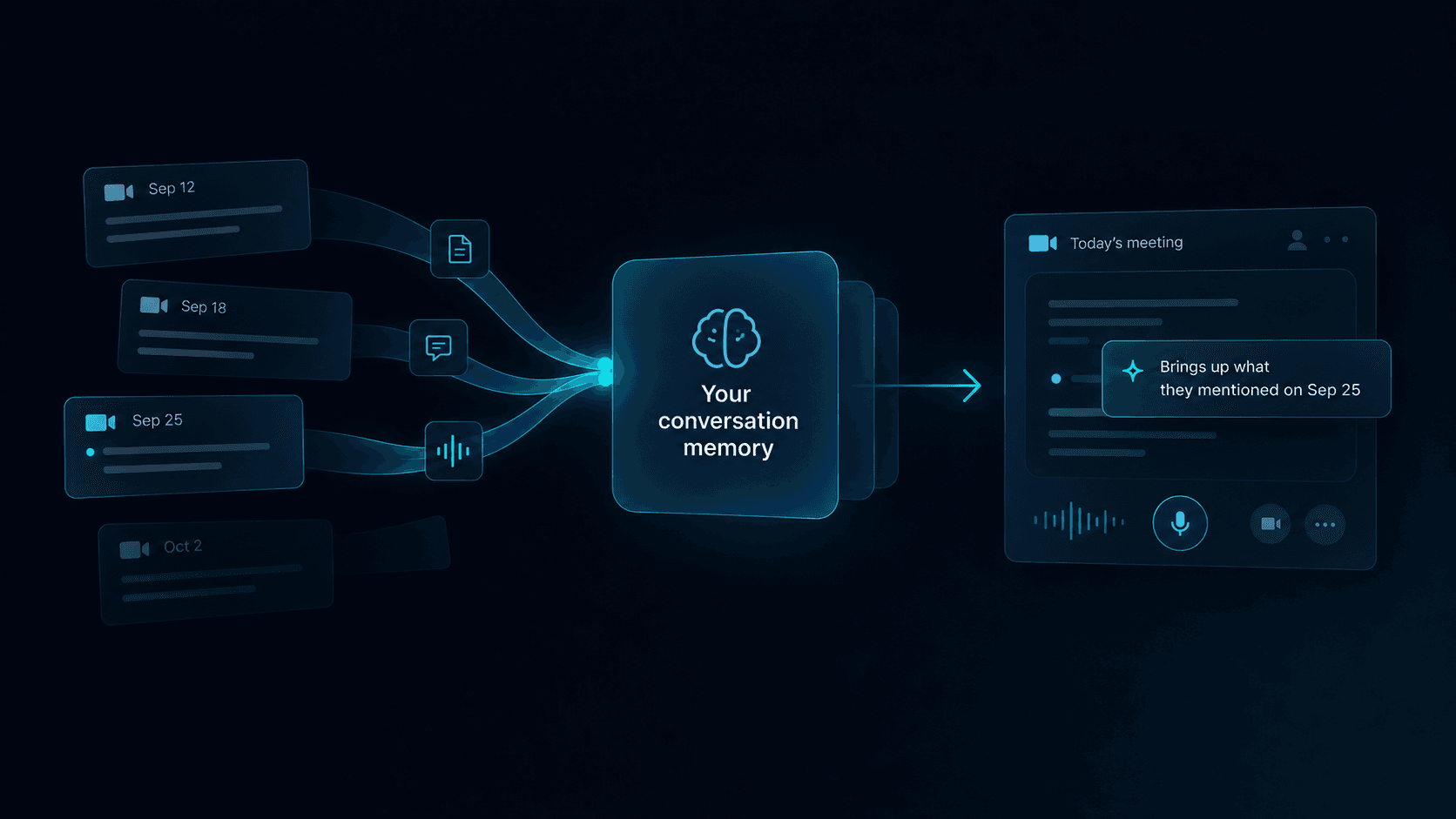
A strong kickoff gives the new owner enough of the customer’s history to pick up the conversation without asking them to rebuild it. This is a Before-stage information problem in the broader conversation lifecycle: relevant history exists, but it has not reached the person preparing for this conversation.
The same principle applies earlier in the relationship: demo call preparation helps sales teams carry discovery context into the demo.
Key Takeaways
- A customer kickoff should pick up where the sales process left off.
- Before the call, review the customer’s goals, expectations, concerns, commitments, stakeholders, and open questions.
- Confirm what has changed since the sale instead of reopening discovery from zero.
- A useful kickoff agenda should cover both what happens next and what has already been agreed.
- The customer should never have to re-explain something your company already heard.
Why Kickoff Calls Lose Context So Easily
A handoff looks simple in a pipeline: the deal closes, ownership changes, and the next team takes over.
The conversation itself is harder to transfer.
During discovery and evaluation, the customer may have explained why the project matters now, what has already gone wrong, how they define success, where adoption could get difficult, and which deadlines are fixed.
They may also have heard promises from the sales team or left questions unresolved for the next meeting.
Parts of that history may sit in CRM fields. Longer explanations could be buried inside sales call notes or transcripts, while other details may never have made it out of the original conversation.
By kickoff, the CSM often has enough information to know what was sold, without necessarily understanding how the customer got there.
That difference becomes obvious the moment the customer hears a question they already answered.
What to Know Before the Kickoff Call
You do not need to reconstruct every sales meeting before you meet the customer.
Start with the details that shape what the customer already expects from your company.
1. Why the Customer Bought
Understand the trigger behind the decision.
What pushed this project high enough on the priority list to act now, and which part of the current workflow was painful enough to change?
Much of this context should already exist from the discovery process.
A useful way to open is to state what you already understand and give the customer room to update it.
Try: “From the earlier conversations, it sounds like reducing the manual handoff between your sales and service teams was the main priority. Is that still where you want us to focus first?”
The customer can correct or update your understanding without telling the story again.
2. What Success Looks Like
Success criteria are usually more specific than the goal written in the account summary.
A new workflow may need to be running before a seasonal deadline. Adoption inside one particular team can matter more than feature breadth, and for some customers the project only counts if it finally replaces the internal workaround everyone already dislikes.
Know what outcome the customer expects before you start discussing implementation.
That keeps the kickoff anchored to the reason they bought rather than turning it into a generic onboarding meeting.
3. What the Sales Team Already Promised
Small commitments made during sales can become large expectations after the contract is signed.
A rep might have said the onboarding team would walk through a specific workflow, promised to bring in someone technical, or left an open question to resolve during kickoff.
Review those commitments before the call.
You may need to clarify what is possible, but you should at least recognize the promise when the customer mentions it.
4. Important Concerns From the Sales Process
The contract being signed does not erase the concerns that came up during evaluation.
Adoption, workflow disruption, technical complexity, stakeholder buy-in, security, or timing may still shape what happens next. The objection handling process often surfaces exactly the concerns a CSM should know about before kickoff.
Knowing that history helps you recognize when an old concern starts becoming an implementation risk.
It also avoids the awkward moment when a customer realizes the team responsible for delivery knows nothing about an issue they spent weeks discussing with sales.
5. Who Matters in the Account
Know more than the attendee names.
The useful context is who sponsored the purchase, who will use the product or service day to day, who owns implementation, and where approval or resistance may come from.
A new stakeholder joining kickoff can change the conversation quickly. If they raise something the customer already discussed during sales, that background helps the CSM respond without making the original buyer replay the whole process.
6. What Is Still Open
Keep a short list of things that still need to move forward:
- questions your team has not answered
- decisions the customer has not made
- information the customer still needs to provide
- commitments your team still needs to complete
- next steps that were discussed but never closed
If an unanswered question was carried over from the sales process, treat it the same way you would handle a question you cannot answer during a sales call: make the gap visible, assign ownership, and close the loop.
These open items are often more useful than a long recap of everything that happened before the deal was signed.
They tell you where the conversation needs to go next.
Customer Kickoff Call Agenda: A Structure That Doesn’t Restart Discovery
For many customer kickoff calls, 30–60 minutes is enough. A simple implementation with a small stakeholder group may fit into 30 minutes; a more complex account with several owners or open decisions may need closer to an hour.
The agenda below gives the customer room to update the picture without asking them to recreate it.
1. Reconnect to the existing context — 5 minutes
Open by briefly reflecting what your team already understands.
Try: “Before we get into the plan, I want to make sure we’re starting from the context you’ve already shared with us. My understanding is that X is the main priority, with Y as the biggest constraint.”
Then ask whether anything important has changed.
This signals that the kickoff is continuing an existing relationship.
2. Confirm success and priorities — 5–10 minutes
Align on what the customer wants the work to accomplish.
Summarize what was captured during sales and ask for an update.
Try: “The outcome we have documented is X by the end of Q4. Is that still the right success measure, or has anything shifted since the last conversation?”
Spend more time here when the buying process was long or several stakeholders were involved.
3. Align on roles, ownership, and the working process — 10 minutes
Clarify who owns what from this point forward.
Cover:
- primary customer owner
- people who need to be involved
- your team’s main point of contact
- communication cadence
- major milestones
- dependencies that could slow progress
Try: “We have A and B as the main stakeholders from the sales process. Before we map responsibilities, has anyone else become important since then?”
4. Bring forward commitments and open questions — 10–15 minutes
This is where many handoffs quietly fail.
Review unresolved questions and commitments from sales before the meeting, then surface the important ones yourself.
Try: “There were two things left open from the evaluation: X and Y. I have an update on X, and I’d like to make sure we leave today with an owner for Y.”
5. Agree on the immediate next steps — 5–10 minutes
End with concrete ownership.
Confirm what happens after the call, who is responsible, and when the customer should expect the next milestone or conversation.
Try: “I’ll send the updated implementation plan after this call. You’ll confirm the stakeholder list by Thursday, and we’ll use next week’s session to walk through X.”
The next conversation now has a clear starting point of its own.
What’s Worth Asking Again — and How to Phrase It
Some information deserves another check during kickoff. Priorities, timelines, stakeholders, and current workflows can all change between signing and onboarding.
Referencing what you already know makes the question easier to answer and gives the customer a chance to correct outdated information.
| Makes the customer start over | Shows the previous conversation carried forward |
|---|---|
| “What are your priorities?” | “The main priority during the sales process was X. Has anything changed since then?” |
| “Who needs to be involved?” | “We have A and B as the main stakeholders so far. Is there anyone else we should bring in now?” |
| “What’s your timeline?” | “The go-live target discussed was the end of Q4. Is that still realistic on your side?” |
| “What are you currently using?” | “You mentioned the workaround your team built internally. Is that still in place?” |
| “Are there any concerns we should know about?” | “Adoption came up as a concern during evaluation. Is that still the main risk you’re thinking about?” |
It also proves that what the customer told your company did not disappear between teams.
When the History Matters During the Call
Most teams already store plenty of customer information.
A CRM can show ownership, stage, and account details, while notes and transcripts preserve different levels of the conversation itself.
The difficult moment comes when the customer refers to one specific part of that history during the call.
They might say:
“This is the concern I raised with your sales team before we signed.”
The CSM may technically have access to that information. Finding it while the customer waits is a different experience from having the relevant part already available.
That is the problem kernous works on: making the relevant part of a customer’s history available inside the conversation you’re in — including the history you weren’t there for.
Make the Next Conversation Easier Too
The kickoff creates new context of its own.
Priorities, stakeholders, deadlines, and concerns can all change once implementation begins.
Capture those changes in a way the next person can actually use.
That is the practical side of conversation continuity: each meeting should leave the next one with a better starting point.
A customer should not need to remember which person at your company heard which part of the story.
Your company heard it.
That should be enough.
FAQ
What should be covered in a customer kickoff call?
A customer kickoff call should usually cover the customer’s goals, success criteria, key stakeholders, ownership, timeline, working process, open questions, previous commitments, and immediate next steps. It should also confirm any important context carried over from the sales process.
What is a good customer kickoff call agenda?
A simple kickoff call agenda can include five parts: reconnect to the existing context, confirm success and priorities, align on roles and responsibilities, resolve open questions or commitments, and agree on next steps. For most accounts, this can fit into a 30–60 minute meeting.
What information should sales hand off to customer success?
Sales should hand off the customer’s goals, key problems, decision criteria, important stakeholders, commitments made during the sales process, major concerns or risks, unresolved questions, timeline expectations, and any context that could affect onboarding or delivery.
How do you avoid making customers repeat themselves during onboarding?
Review the sales context before the kickoff and reference what is already known when asking questions. Summarize your current understanding, then ask what has changed or what needs clarification instead of asking the customer to explain the account from the beginning.
What should I do if I was not part of the sales conversation?
Focus first on the context that shapes the customer’s expectations: why they bought, what success means, what your company promised, which concerns were raised, who matters in the account, and what is still unresolved. You do not need to replay every sales conversation to run a well-informed kickoff.
How long should a customer kickoff call be?
Most customer kickoff calls can run 30–60 minutes. A straightforward onboarding with a small stakeholder group may only need 30 minutes, while a complex implementation involving several teams, open decisions, or technical dependencies may require closer to an hour.