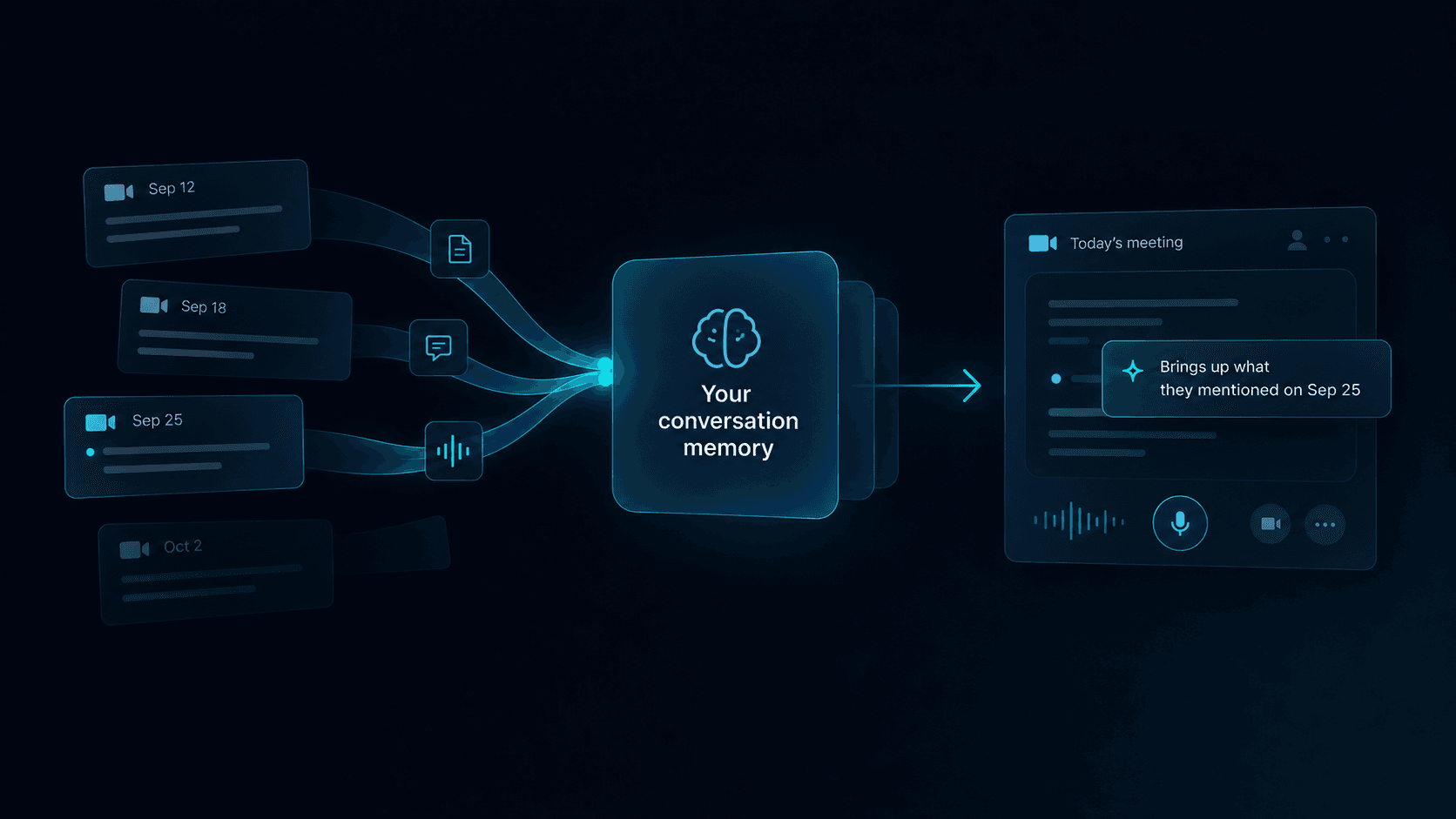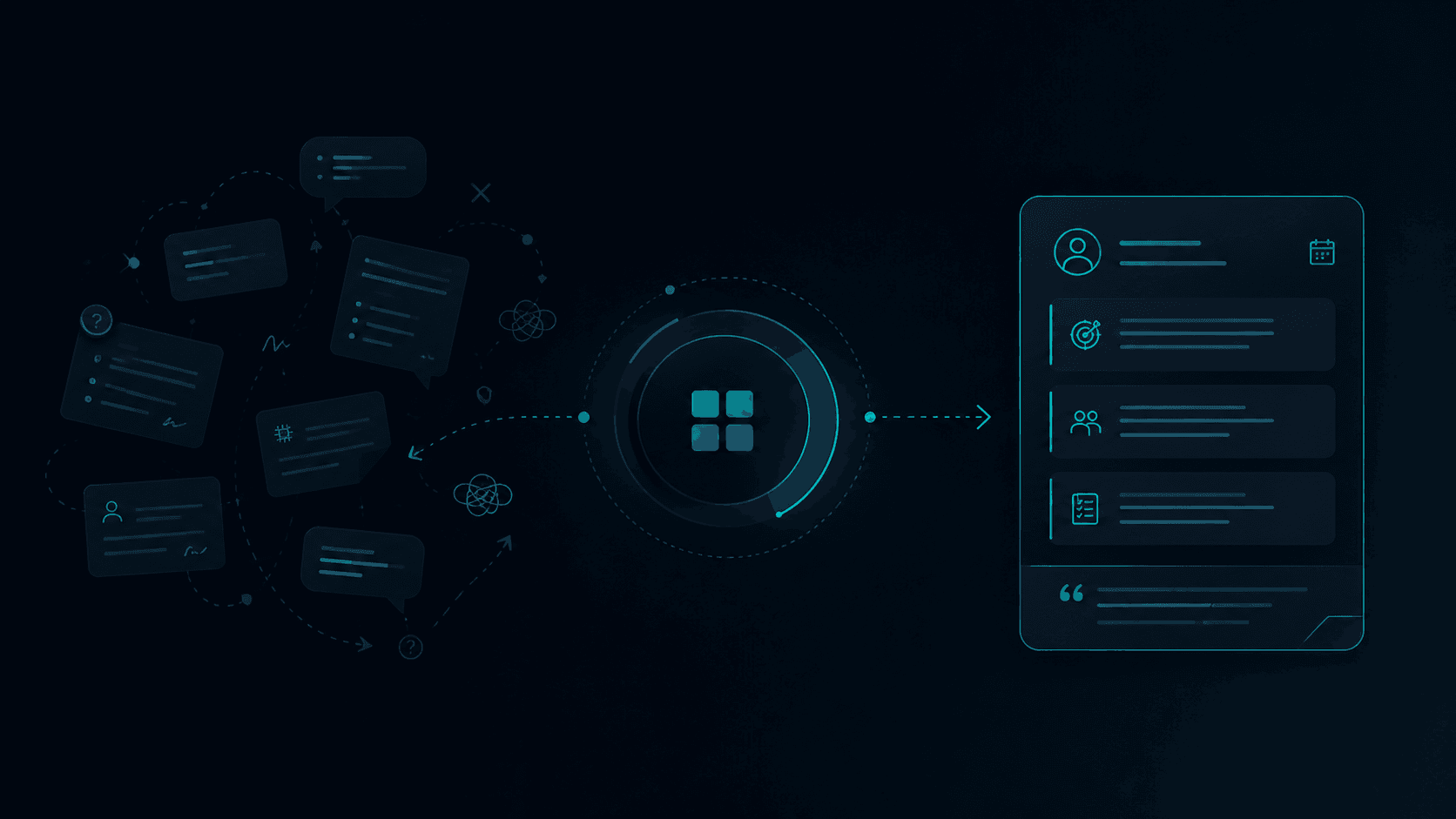
Demo call preparation starts with reviewing what the prospect already told you in discovery: why they're evaluating, what matters most, what's still unresolved, and what you committed to show. A focused ten-minute review can help turn a generic walkthrough into a demo built around their priorities.
A prospect spends half an hour in discovery explaining where their current process breaks.
A week later, the demo opens with a question that ignores all of it.
For the next forty minutes, they are watching to see whether anything they said actually changed what you chose to show.
That is what demo preparation is really for.
Product knowledge matters. So does a clean environment and a rehearsed flow. The prospect is also evaluating something else: whether your team understood their situation well enough to make this demo feel specific to them.
The awkward part is rarely one repeated question. It is the realization that the previous conversation did not seem to travel with them into this one.
Key Takeaways
- Build the demo from discovery context before deciding which features deserve screen time.
- A short review of priorities, open questions, commitments, and attendee context is usually enough to prepare well.
- Open by referencing what the prospect already told you, then ask for updates.
- Give the demo a clear structure while leaving room for the prospect to change its direction.
- Good preparation includes knowing what you can safely ignore.
Demo Call Preparation Checklist
If the call starts in ten minutes, use this first.
This checklist is specific to demos. For a broader version that applies across sales conversations, see the sales call preparation guide.
| Review | What you need before the demo |
|---|---|
| Why they're evaluating | The trigger that made the problem worth solving now |
| Main priorities | The 2–3 outcomes or workflows that matter most |
| Discovery context | What they already told you, in their own words |
| Open questions | Anything your team still owes them |
| Concerns | Risks or objections likely to shape the demo |
| Commitments | Anything you promised to show, confirm, or bring |
| Attendees | Who is joining and whether anyone is new |
This is enough to give the demo a point of view.
The full account history can stay where it is unless the conversation gives you a reason to go deeper.
What Should Carry Over From the Discovery Call?
A good demo should not restart the conversation from zero. It should continue what the prospect already started in discovery — their priorities, their language, and the questions still open between you.
Preparation becomes much easier once the question changes from:
“What should I show?”
to:
“What did they tell us matters?”
The most useful context usually comes from discovery. Reviewing it helps you decide what deserves attention now.
This is a Before-stage information problem in the broader conversation lifecycle: relevant context exists, but it has not made it into preparation yet.
Start With the Problem in Their Words
Internal summaries tend to compress nuance.
“Needs better visibility” might be accurate, but it gives a presenter very little to work with.
The prospect may have said something much more useful:
“By the time we know an account is at risk, three different people have already talked to the customer.”
That sentence tells you what kind of workflow deserves screen time and which outcome the prospect is likely to care about.
Pull one or two phrases like this from your sales call notes before the demo.
Use their language to make better choices about what to show, without turning the meeting into a replay of their own words.
Rank What Matters Most
Most products contain far more than one demo can cover.
The prospect’s priorities give you permission to leave things out.
A team worried about adoption needs to see the everyday user experience clearly. For a buyer focused on implementation risk, setup and dependencies may deserve more attention than feature breadth.
Decide which two or three priorities should shape the call.
If a feature does not support one of them, it probably does not belong in the first half of the demo.
Carry Forward Unfinished Business
Discovery often creates work for the next conversation.
There may be a question nobody could answer on the spot, a workflow someone promised to show, or a technical detail that needed another teammate.
Bring those items into the demo deliberately.
If an answer still is not available, use the same discipline you would when handling an unanswered question during a sales call: clarify the question, name the owner, and make the follow-up concrete.
Previous concerns belong here too. The objections raised earlier often tell you where the prospect will test the demo most carefully.
Check Who Is Actually Joining
Attendee changes can alter the call more than the deck does.
An executive who missed discovery may want the business case first. A technical teammate can pull the conversation toward implementation details, while someone close to the daily workflow may notice a practical issue that never surfaced earlier.
Know who is joining, which people already have context, and where you may need a brief bridge for someone new.
That preparation helps you adapt without turning the opening into another discovery call for the whole room.
How to Open the Demo Without Restarting Discovery
The first few minutes should show that the earlier conversation influenced this one.
A long discovery recap is unnecessary. A short, specific bridge is enough.
Try: “Last time, you walked us through the handoff between your account and support teams. The biggest issue was losing context when ownership changes, so I’m going to start there today. Has anything important changed since we spoke?”
That opening gives the prospect an easy way to update the picture.
The same approach works for narrower questions.
If you are tempted to ask, “Can you remind me what your current process looks like?”, reference the part you already know:
“You described the current handoff as moving from the account manager into a shared queue. Is that still how it works today?”
If timeline matters, bring forward the date:
“You were targeting an end-of-Q4 rollout when we last spoke. Is that still the timeline we should plan around?”
The prospect can correct outdated information in a few seconds, and the demo begins with evidence that the previous conversation mattered.
Demo Call Agenda: A 45-Minute Structure
A 45-minute demo is a useful default for many B2B conversations.
For a 30-minute slot, keep the reconnect and closing sections intact, shorten the second workflow, and reserve a smaller Q&A window. More complex evaluations may need the full hour.
1. Reconnect to the previous conversation — 5 minutes
Briefly restate the main problem and the priorities you carried forward from discovery.
Try: “The two things I have at the top of the list are X and Y. I’ve structured the demo around those. Is that still where you’d like us to spend most of the time?”
If the answer changes, adjust the plan early.
2. Show the highest-priority workflow — 10–15 minutes
Start with the part closest to the prospect’s reason for evaluating.
Beginning with company history, navigation, or a broad tour of every major feature can wait.
Let the first workflow answer a question the prospect already cares about.
3. Move into the second priority — 10 minutes
Use the next section to address another important outcome, concern, or workflow from discovery.
A simple transition works:
“You also mentioned that X gets difficult when Y happens. Let me show you that part next.”
The transition reminds the prospect why this section is here.
4. Let the prospect change the route — 10 minutes
This is often where the most useful part of the call starts.
A question may reveal a workflow you had not planned to cover, or someone new to the evaluation may surface a requirement that deserves more attention.
Follow the useful detour.
Preparation gives you enough context to understand why the question matters and where it connects to the rest of the account.
5. Close around what changed — 5 minutes
The demo creates new information.
Capture it before the call ends.
Try: “We came in expecting X to be the main focus, but it sounds like Y is now just as important. I’ll follow up on the open question around Z, and we can use the next conversation to decide the next step.”
The next meeting should start with a better picture than this one did.
What You Probably Do Not Need to Prepare
Demo preparation can easily turn into account archaeology.
That rarely helps ten minutes before a call.
You can usually leave these alone:
- full transcripts from earlier meetings
- low-value CRM fields that will not affect today’s conversation
- a feature-by-feature mapping of the entire product
- prepared responses for every objection you can imagine
- a word-for-word script for the full meeting
The useful question is:
Which parts of this account history could change what I show, skip, or say today?
That filter keeps preparation small enough to be usable.
It also leaves more attention available for the actual conversation.
When the Demo Goes Somewhere You Didn’t Plan
A good plan gets you to the useful part of the call. From there, the prospect may take over.
They might ask about a workflow that was only mentioned briefly in discovery or refer back to a concern raised in another meeting. The answer may already exist in notes, a transcript, internal documentation, or another teammate’s conversation history.
What matters is whether that history is usable at the moment the question appears. That is one of the practical challenges behind conversation continuity.
The same handoff problem returns after the deal closes, when a new owner runs the customer kickoff call without having been in any of the sales conversations.
That is the problem kernous works on: bringing relevant context from earlier conversations into view while the call is happening.
The prospect does not need you to remember every detail.
They need to feel that what they told your team changed the conversation they are having now.
See how kernous brings relevant customer context into view during a live conversation.
FAQ
How should I prepare for a sales demo call?
Review why the prospect is evaluating, their top priorities, important language from discovery, open questions, previous concerns, commitments your team made, and who will attend. Use that context to decide what deserves the most time in the demo.
What should I review before a product demo?
Focus on the parts of discovery that can change the call: the prospect’s main problem, two or three priorities, unresolved questions, known concerns, promised follow-ups, and the desired next step. You usually do not need to reread the full account history.
How long should a sales demo call be?
Many B2B sales demos run 30–60 minutes. A focused evaluation can fit into 30 minutes, while a more complex demo with several stakeholders, workflows, or technical questions may need closer to an hour. The 45-minute structure above is a useful middle ground.
What is the difference between a discovery call and a demo call?
Discovery is used to understand the prospect’s problems, priorities, constraints, and buying context. The demo uses that information to show the parts of the product that are most relevant to the situation they described.
Should I use a script during a sales demo?
A structured flow is useful, especially for the opening, key workflows, and closing. Leave enough flexibility to follow questions and adjust the route when the prospect reveals something more important than what you planned to show.
What should I do if a prospect asks something I cannot answer during the demo?
Clarify exactly what they need and avoid guessing. If the answer requires follow-up, assign a clear owner and timeline before the call ends so the question does not disappear between meetings.